Experiences
November 2023
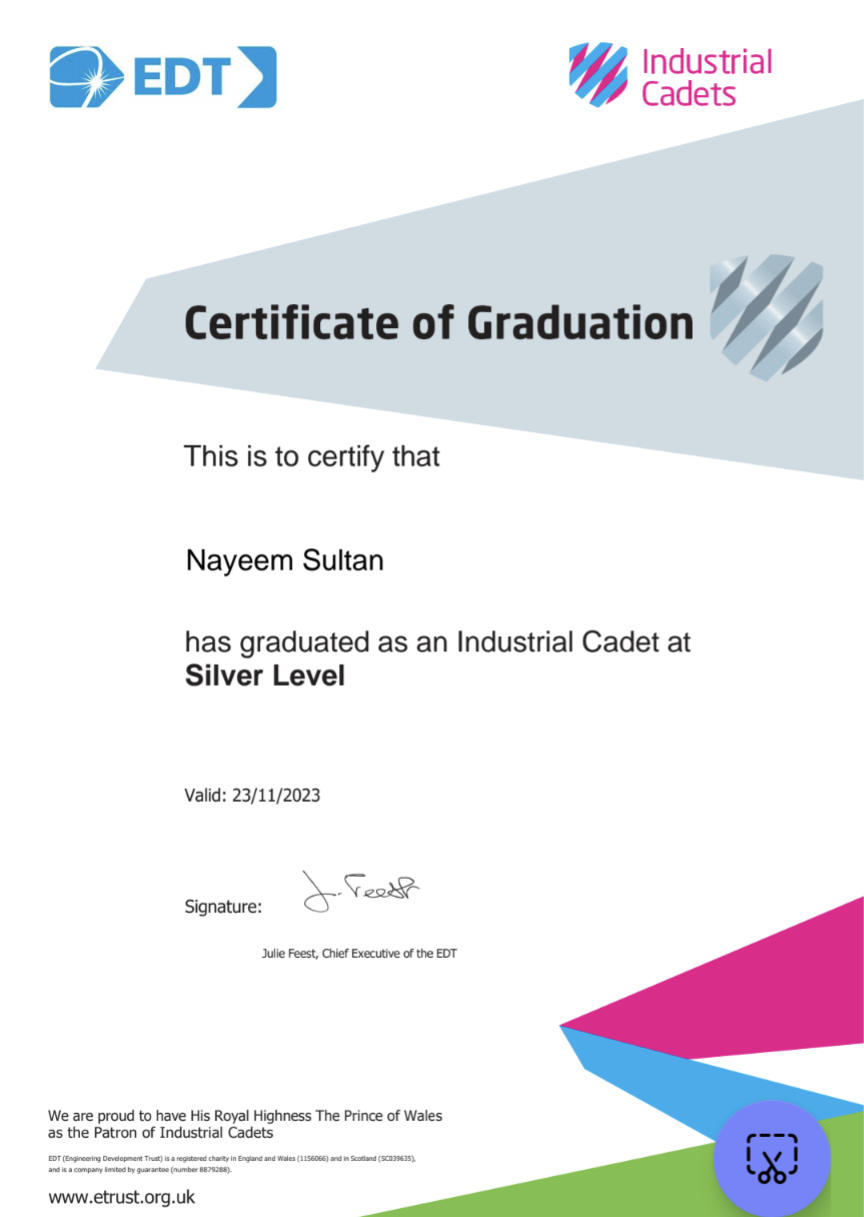
I undertook a Online Work Experience Course provided by BAE Systems, an Aerospace, Defence and Cybersecurity company that is vital to the UK's military. This experience awarded me the Industrial Silver Cadet Award.
This course lasted an entire week and tested skills such as:
- Problem Solving
- Teamwork
- Quick thinking
- CAD and Idea generation
- Time management
The objective of the experience was to generate, design and then present an idea of a Drone that was to be used for Humanitarian efforts such as Aid and rescue,
within very strict design restrictions and brief requirements.
At the start of the course, everyone was put into smaller group calls (including me) and we were to introduce ourselves and immediately work together to decode a puzzle made by the Experience team.
The puzzle was a crossword that had questions relating to the invention of tech such as "What was the first programming language". Other tasks included learning about Aerospace and the companies history and inventions.
During these tasks we were given a short time limit, this was a pattern for the entire week to show how stressful and time demanding working on an Engineering project can be.
After the icebreakers and fun little tasks, we were then presented the main part of the experience which was to design a Drone for the company.
The design brief we were given were as such:
- It needed to travel about 50km
- The dimensions had to fit within (400x800x500)mm
- The drone must be amphibious or travel over water
- It must carry at least 3 items for humanitarian aid (first aid kit, water, rations, etc)
- Be as cost efficient as possible
This was all to be done within 5 days as of the day it was presented to us.
My Design
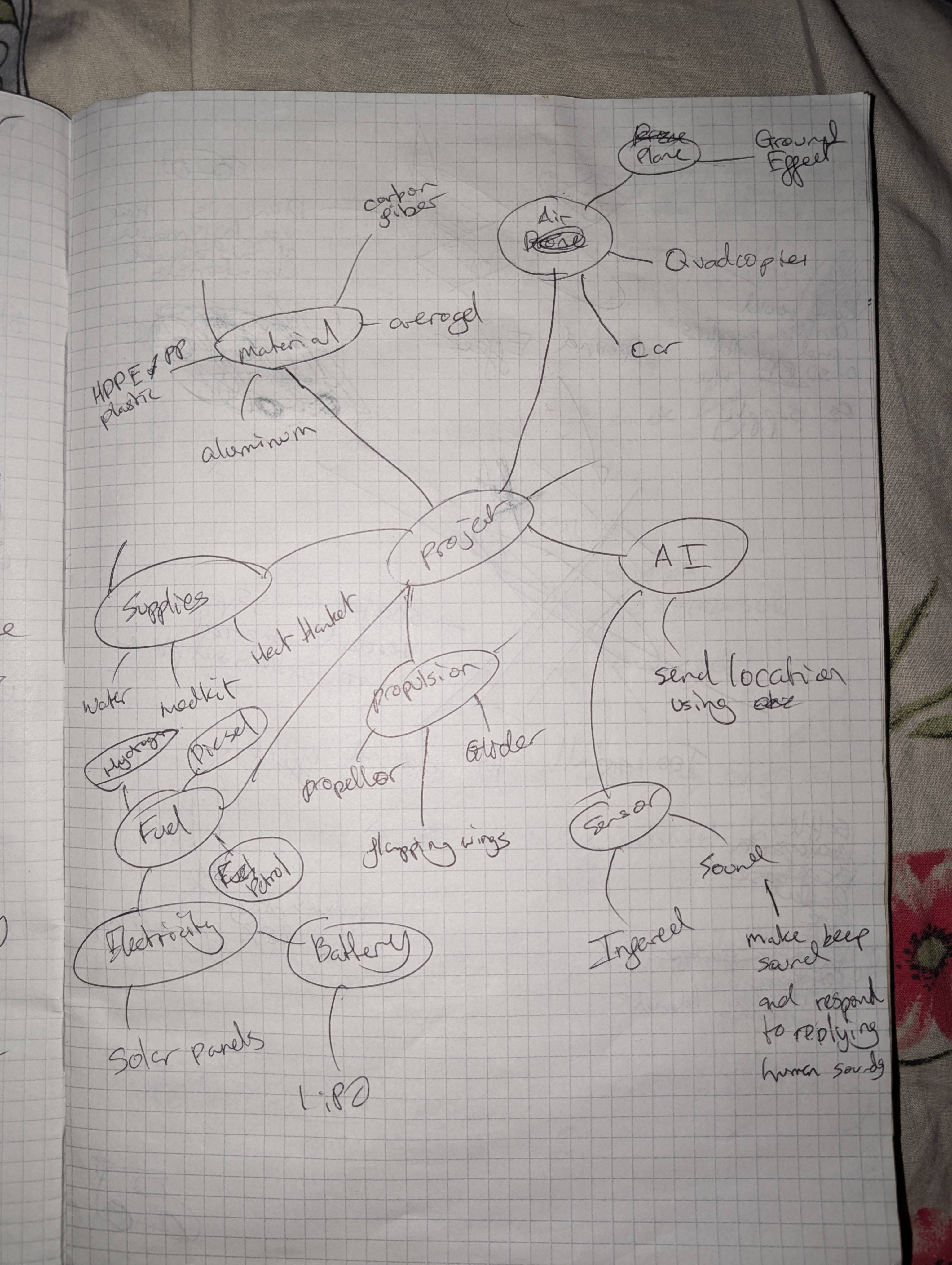
I first needed to know what my drone would require and the different technical specs it would have so I started with what I was taught in school and created a Mindmap.
 While generating ideas, I was completely certain that an Air Vehicle would be the most suitable.
As bias as it sounds, it had the most potential when it comes to Range, Surveillance and the degree of Failure would be less compared to a Land Vehicle as it wouldn't have to worry about getting stuck in rough terrain.
While generating ideas, I was completely certain that an Air Vehicle would be the most suitable.
As bias as it sounds, it had the most potential when it comes to Range, Surveillance and the degree of Failure would be less compared to a Land Vehicle as it wouldn't have to worry about getting stuck in rough terrain.
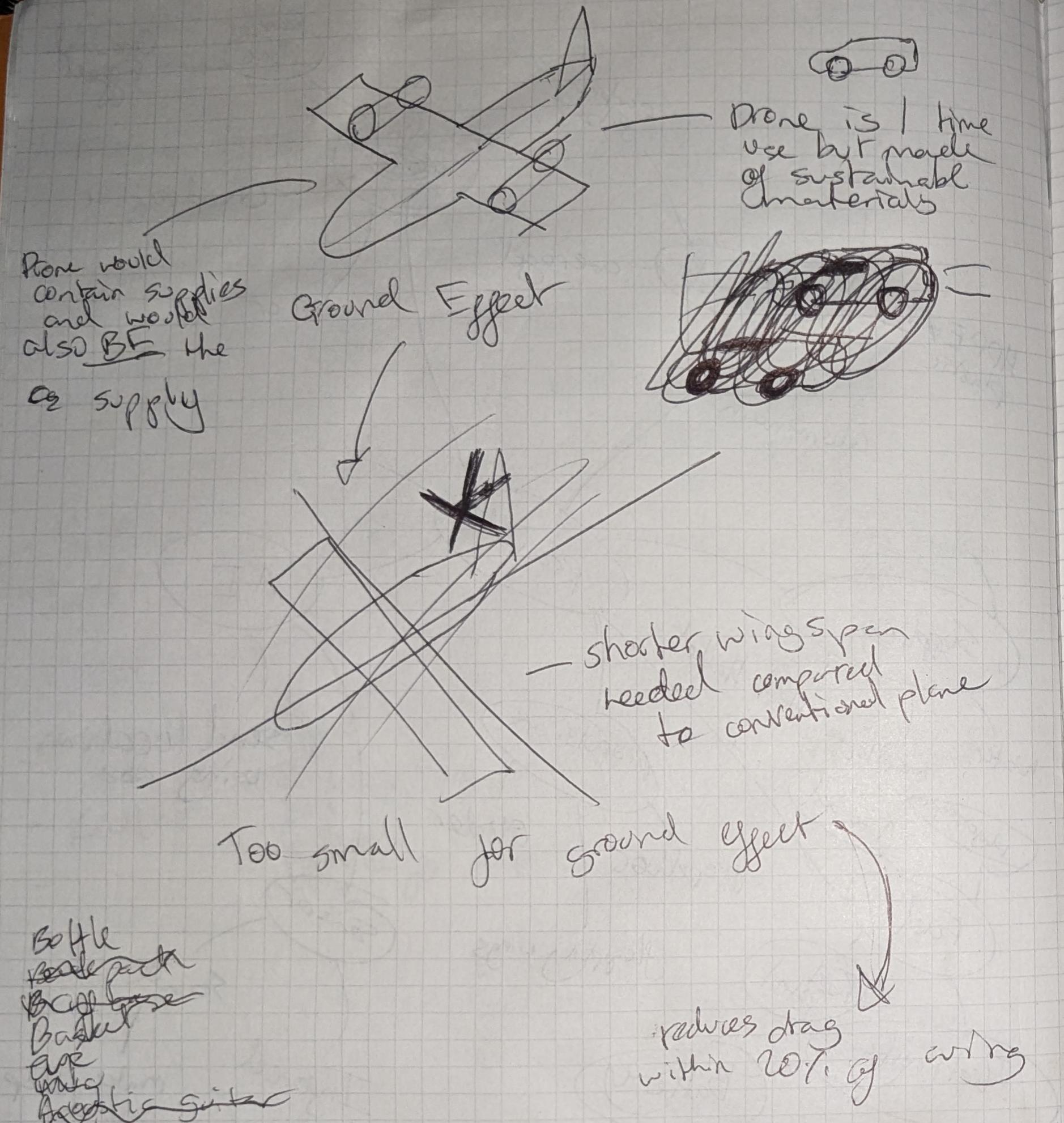
My first idea was to create an disposable Air Vehicle that would utilise the Ground Effect and its materials could be used with the care package included. This was due to my already fascination of this interesting Physics Interaction but it also had it's strengths compared to a High Altitude Aircraft.
In summary, the Ground Effect is an aerodynamic phenomenon that occurs when an aircraft is close to the ground, causing the wings to experience an increase in lift and a decrease in drag.
On paper this would allow the aircraft to fly a longer distance which in turn would increase its effectiveness by decreasing overall induced drag by upto 60%. However, there were issues when it came to dimensions as the wings were just too short to achieve the best yield. To achieve the Ground Effect, the aircraif must be within 20% of its wing span relative to the ground. For a drone so small, this would just lead to the drone crashing into nearby terrain.
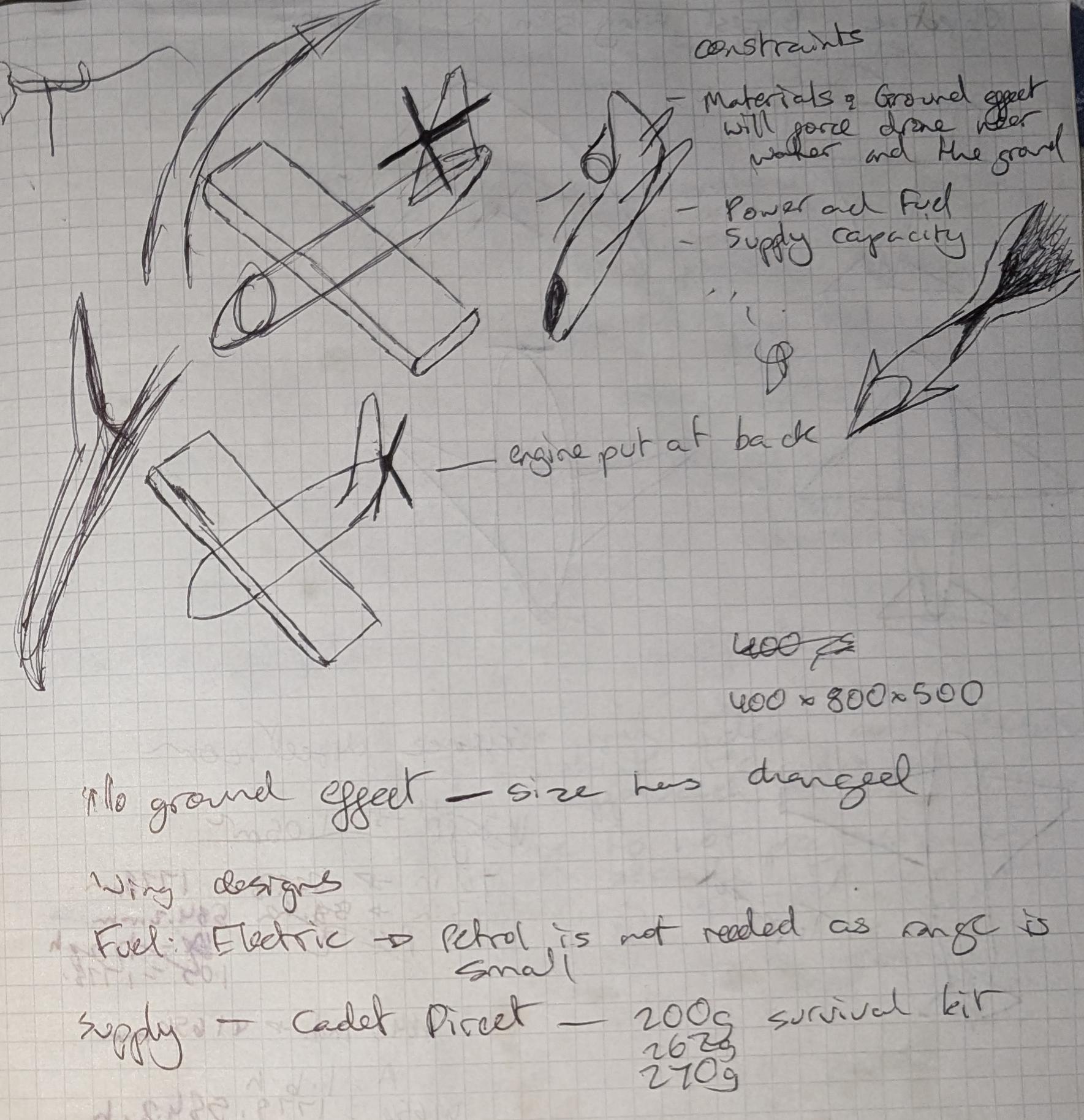 As well as this, midway through the week while we worked on our projects, the BAE team decided to change the dimension requirements to make the drone even smaller. This inevitably killed my idea for the Ground Effect drone, even while I was trying to figure out how I could still utilise this quirk. I was put back to the drawing board and came up with idea 2.
I decided going for a more conventional drone design, consisting of an electric motor, wings and the such. I started researching on many wing designs to figure out which one was the most effective.
As well as this, midway through the week while we worked on our projects, the BAE team decided to change the dimension requirements to make the drone even smaller. This inevitably killed my idea for the Ground Effect drone, even while I was trying to figure out how I could still utilise this quirk. I was put back to the drawing board and came up with idea 2.
I decided going for a more conventional drone design, consisting of an electric motor, wings and the such. I started researching on many wing designs to figure out which one was the most effective.
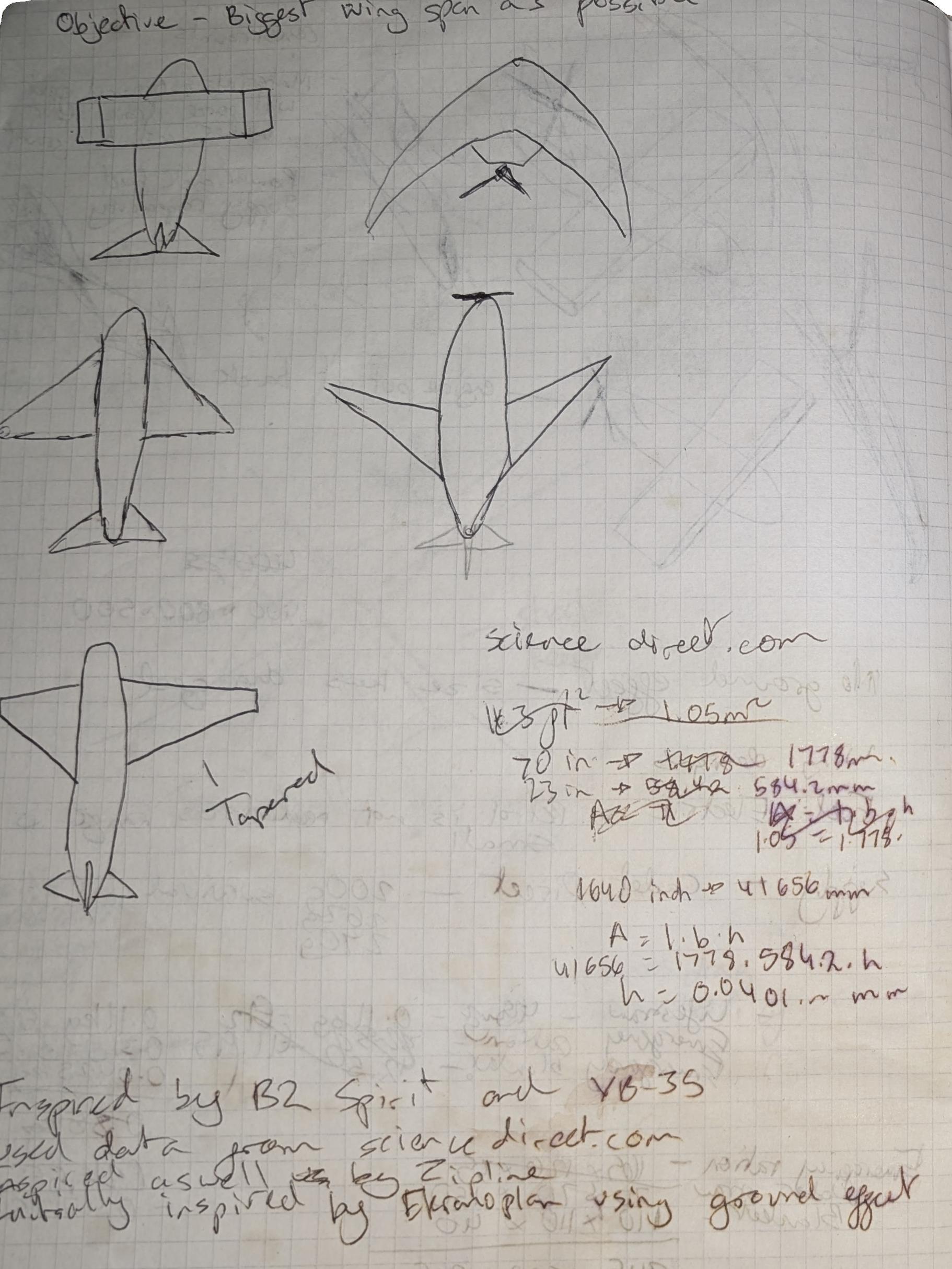
I decided going for a more conventional drone design, consisting of an electric motor, wings and the such. I started researching on many wing designs to figure out which one was the most effective.
Due to the dimension limitations, it was clear that my objective was to have the biggest wing span possible, especially for a fixed wing aircraft. I chose fixed wings over standard helicopter style drones as they provide a longer range with less moving parts and would be quicker for a longer distance.
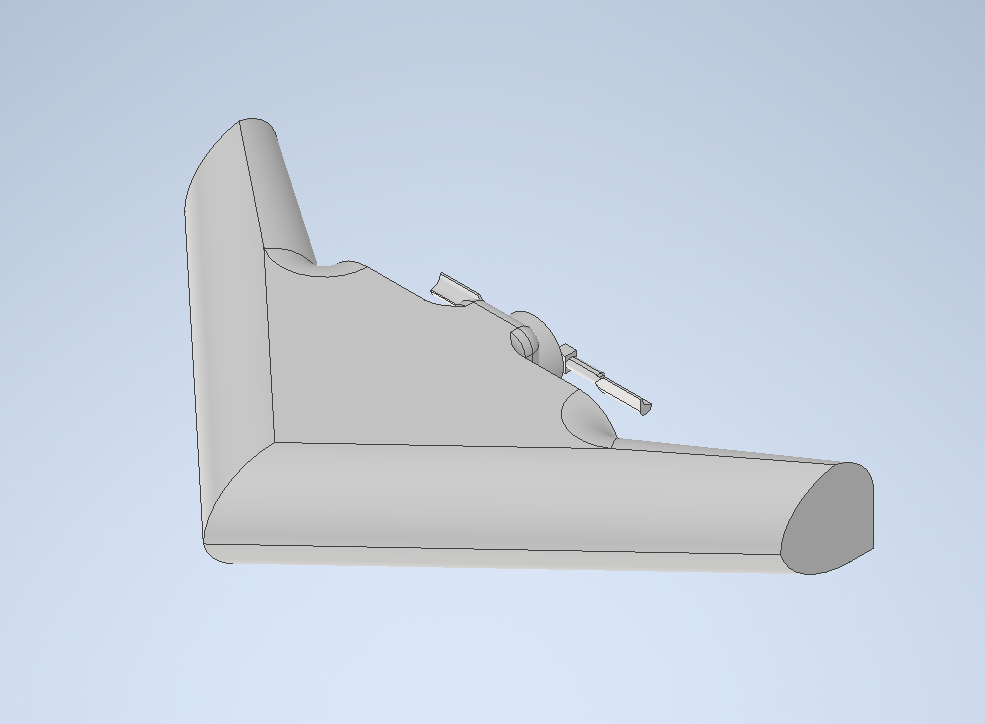
To achieve my goal, I took heavy inspiration by the B2 Bomber and the YB35
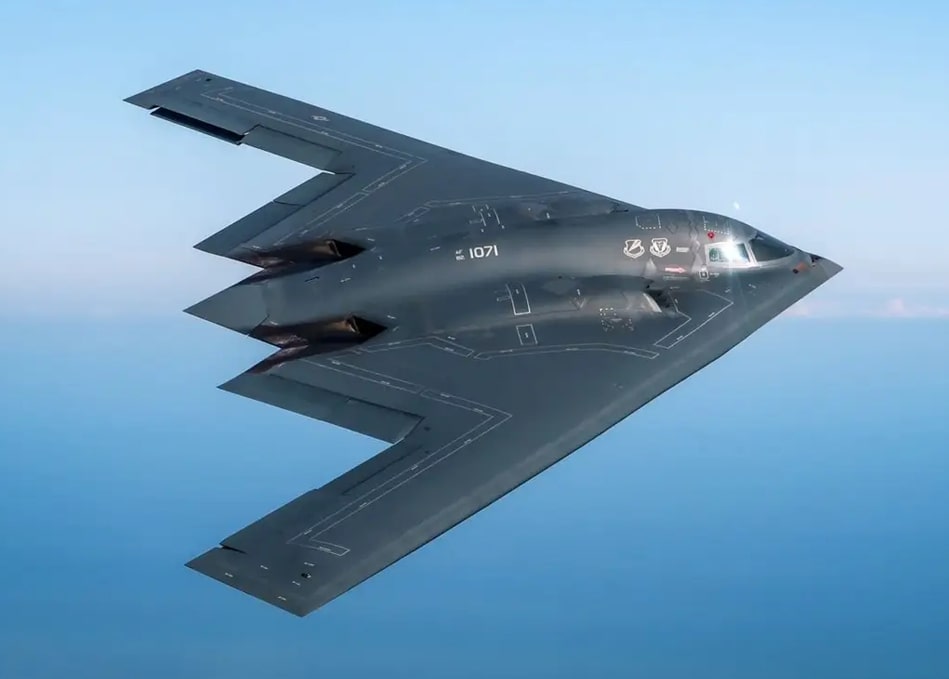
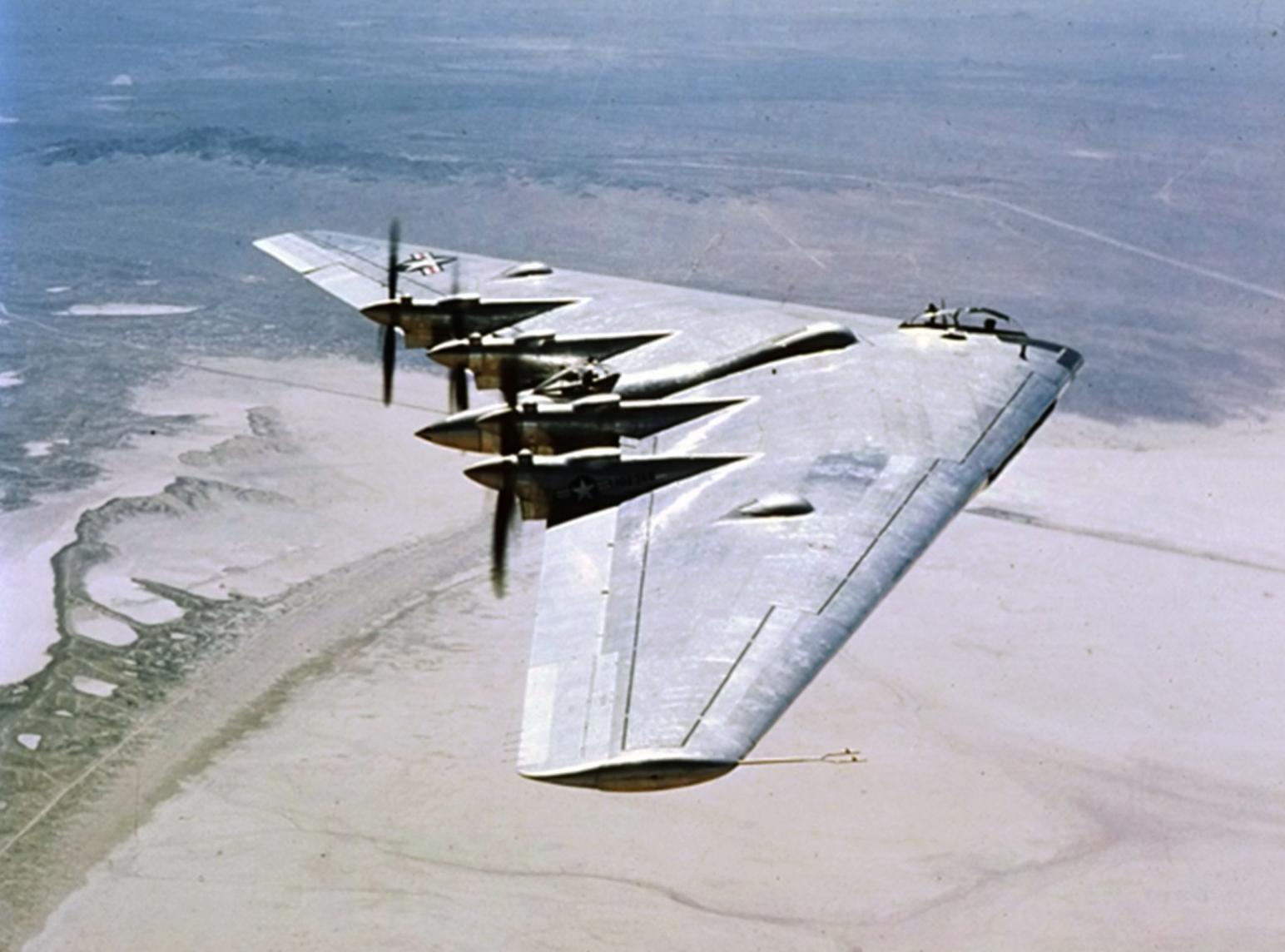
This design completely maximises the wing span as the plane itself is literally the wing. With this design I also created a loophole. The issue with these designs is the small size dimensions, meaning the you would need to sacrifice range for cargo space or vice versa.
With my design I thought of creating the drone as normal, however on takeoff it would be catapulted into the air. This would remove the issue with taking off and give the drone a great amount of initial velocity and lift. This idea was inspired by the company "Zipline" which create drones that are catapulted deliver blood to hospitals in Africa.
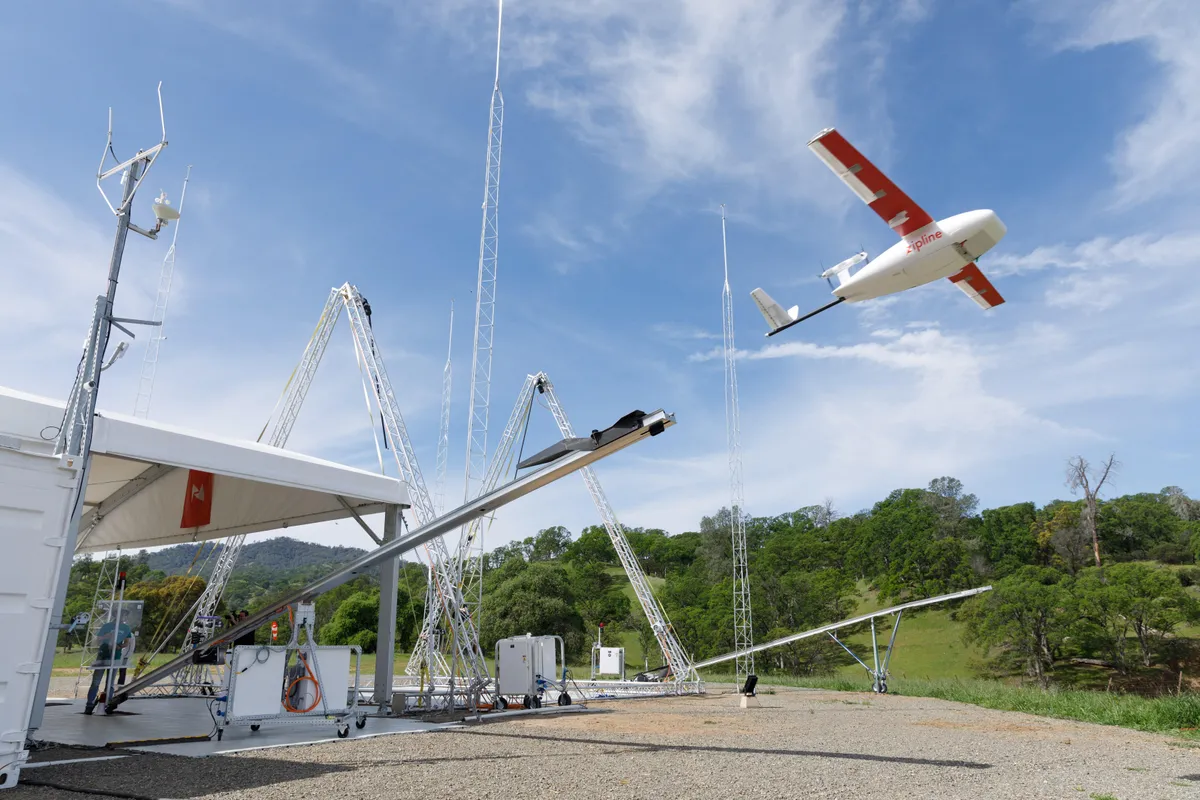
I started expanding on this idea and eventually modelled it on CAD software, specifically Autodesk Inventor.
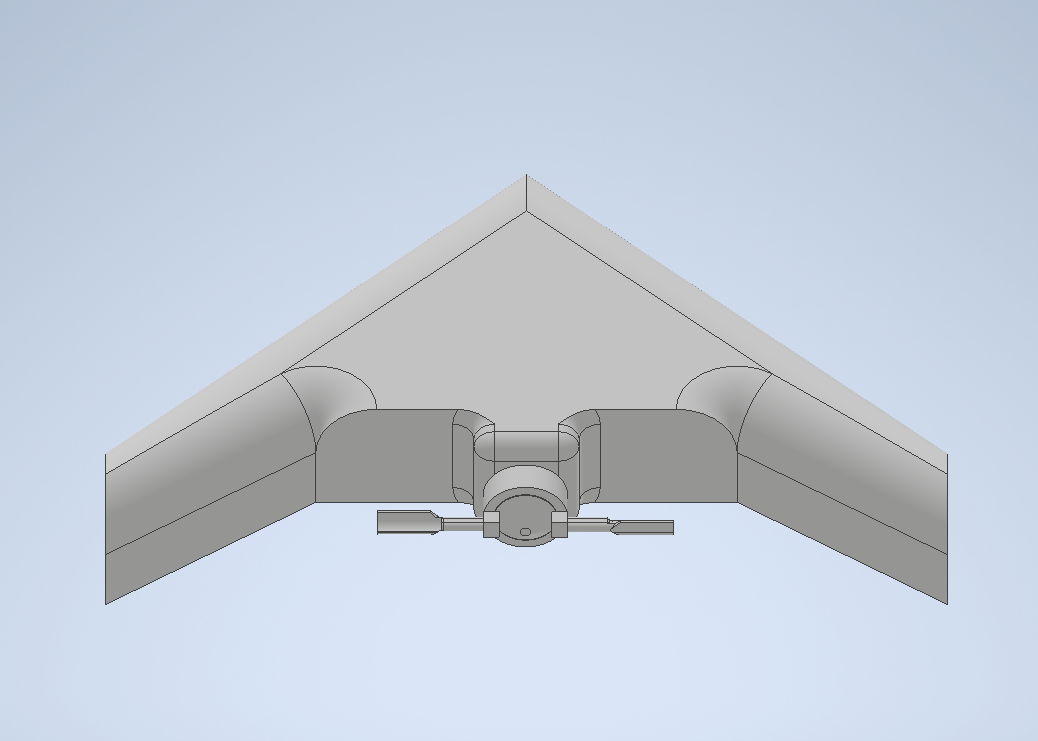
We were tasked in the middle of our designing stage to present our rough models and ideas so I presented mine to the other participants. My idea looked rougher than others but that would soon change.
I started researching more and more on wing shape and control surfaces and specifically the designs between aerofoils, such as the pitching moment and pitch angle of the wing. With the "Flying Wing" design, I also researched on elevons.
I also took this opportunity to start fitting in different components in the design, such as an infrared camera to detect lifeforms, a battery, what cargo it would carry and how to deliver it. It was decided that the drone would carry a first aid kit, emergency rations, and a lifestraw. I picked a lifestraw over water for weight reasons, as water is just too heavy to carry on a small drone.
Final Design:
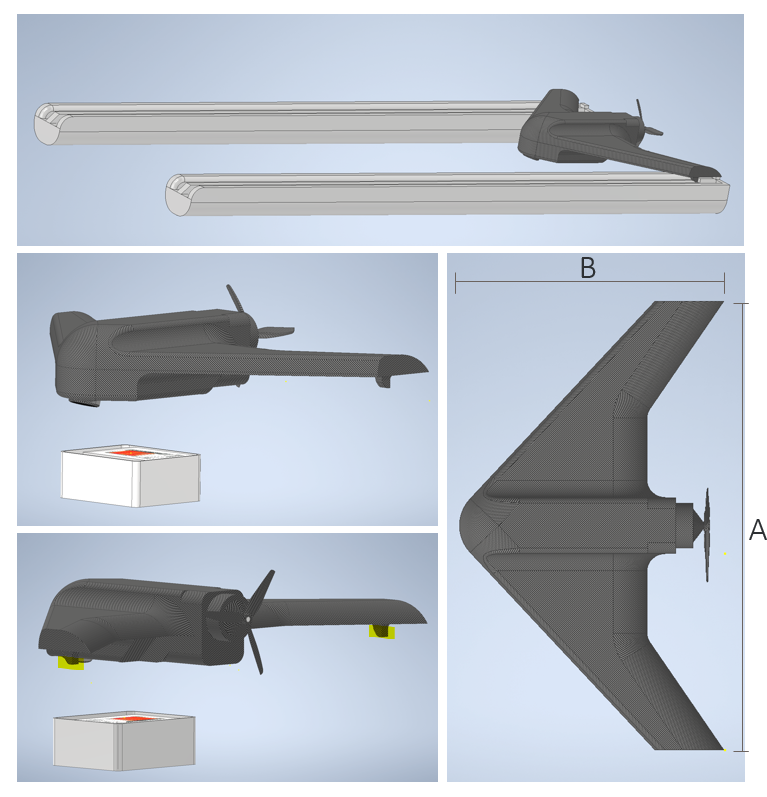 My final design is something I'm very proud of. I had this worry of not being able to model the drone well after the first design, but I managed to pull it off using the knowledge of aerofoils I had researched earlier.
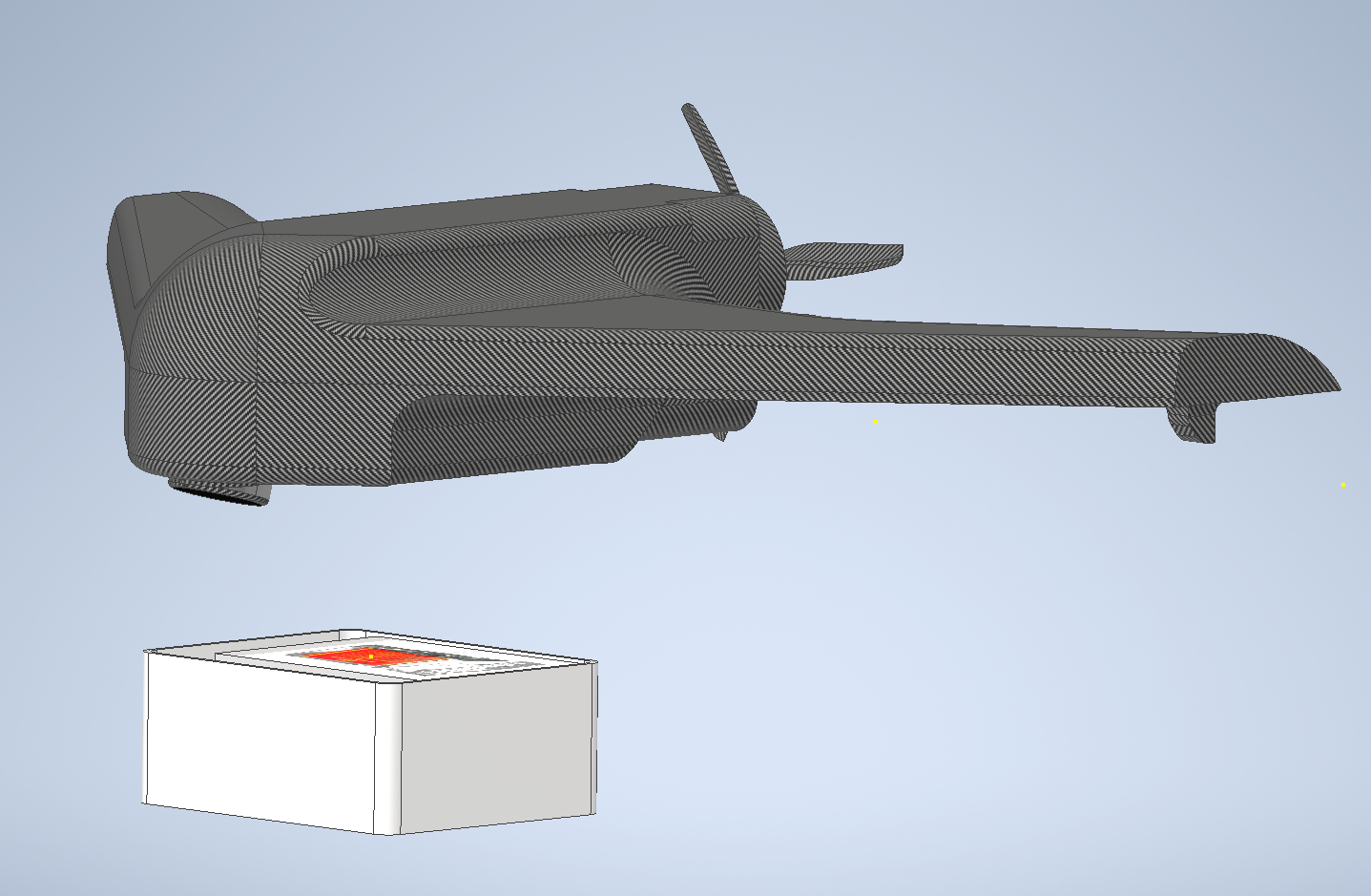
Compared to the previous design, I added an infrared camera (shown by the little hump at the front of the drone), specifically an X80 raptor infrared camera from Nextvision with 80x zoom plus 40x and 2x digital zoom. I also added a compartment under the hull where the supply crate would be dropped out from.
The drone is comprised of the main body being made out of carbon fiber while the supply crate would be made out of sustainable cardboard that could be used as a fire starter. This contradicts the design brief as one of the points is to be as cost efficient as possible, with carbon fiber being quite the opposite.
However, my point is that the drone would be reuseable and of quality. For a drone with this use and market, I thought that a more sustainable, resusable, higher quality drone would suit better than a cheap disposable drone that has higher degree of failure and overtime the cost would add up.
The idea is that the drone would be fitted in with the pegs on the wings (highlighted yellow) and launched by a catapult (shown in the video above) to initally get it up into the air. The drone will then fly on a set path and will detect lifeforms using its infrared camera. The infrared wavelength allows the drone to see through the night aswell. On finding a target, it will fly towards them and drop its supply crate that will have a nylon parachute attached to it that will slowly glide down. The drone will then fly back, be caught by a net to restock and repeat the process.
The app "what3words" could also be implemented into the drone's set path for use in the UK.
At the end of the experience, all participants of the experience got put into smaller groups with 2 BAE Engineers in each group. We were then tasked to present our design to the engineers and other particpants.
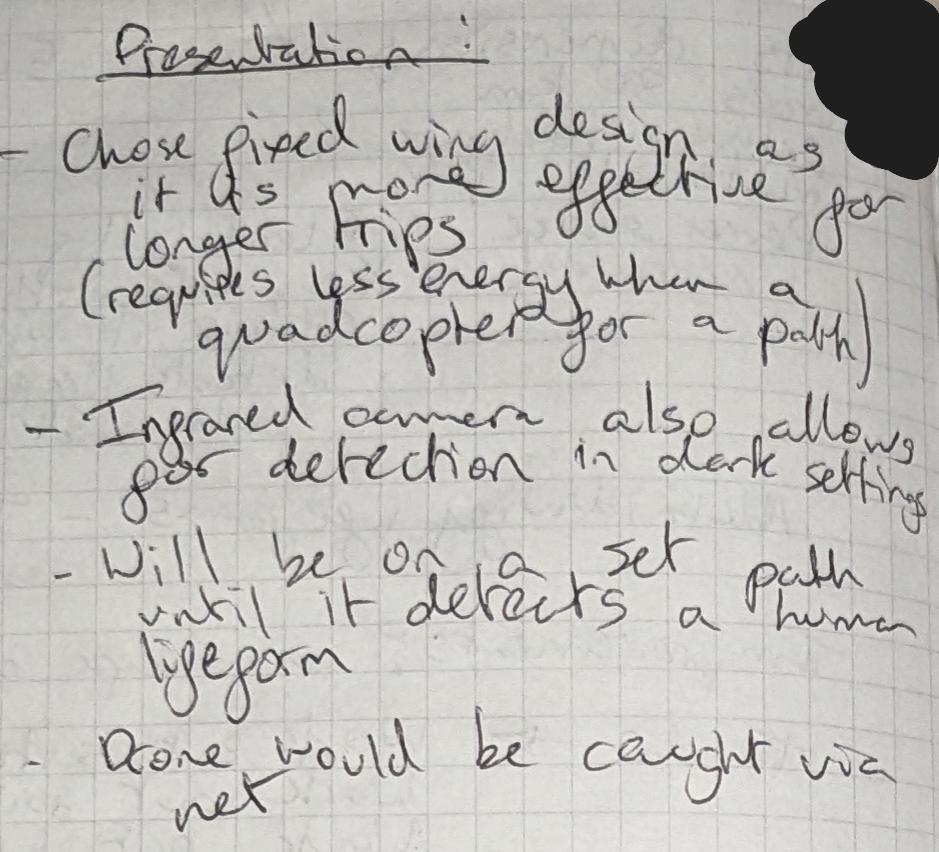
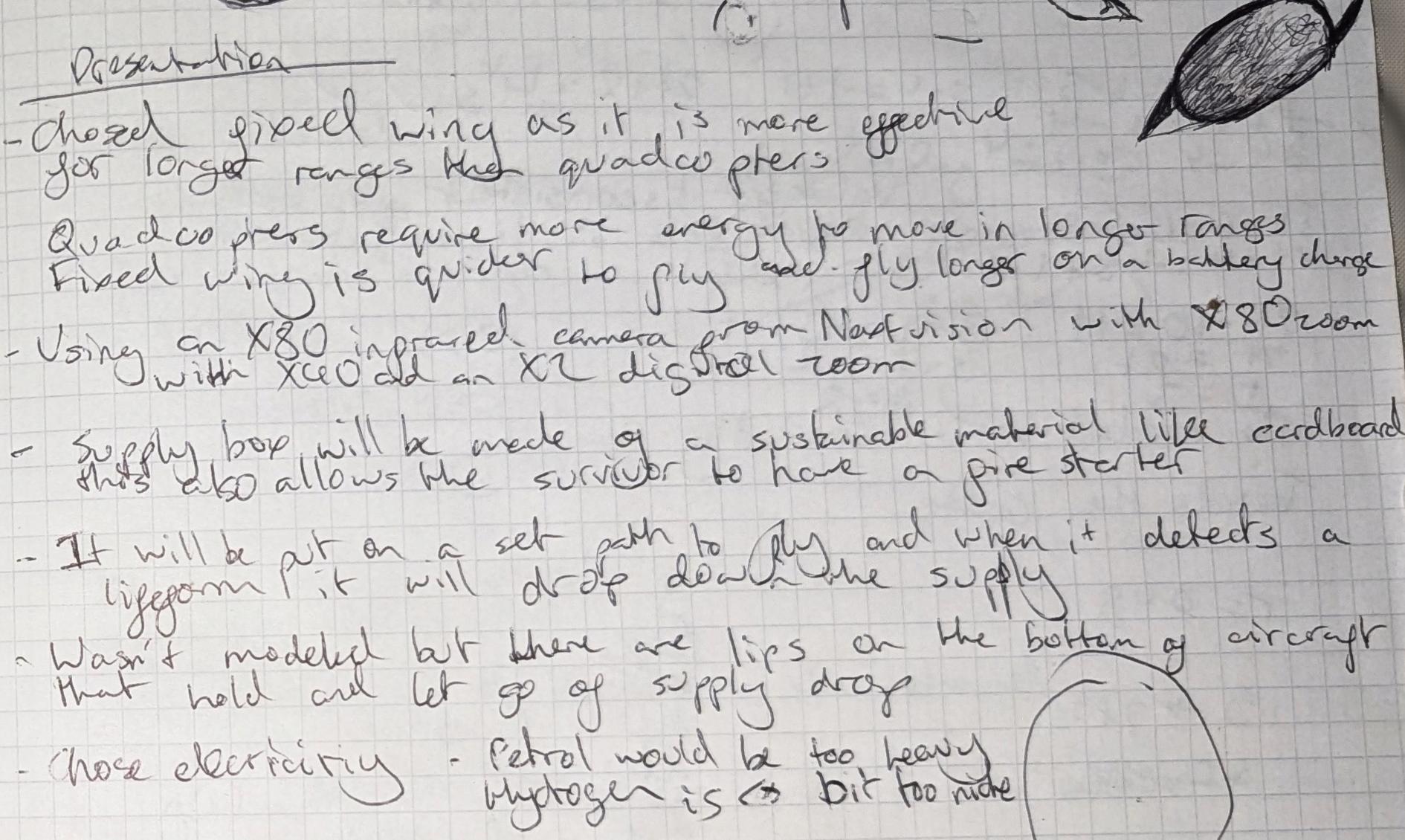
My presentation went great and my drone was recognised as one of the best designs by both the Engineers and even other participants. Some of the engineers feedbacks were to reduce the number of pegs to 1 and have one line for the launcher instead of 2 to minimise chances of error.
Personal Thoughts and Next steps
I am really proud of this design and it was proof that my effort was all paid off as it really was something that stuck out to other participants and the BAE team. After the experience ended, I spoke to other participants through social media and we shared eachother our ideas. We all came to conclusion that I infact overdid the experience and my drone was on another level of attention to detail (not bragging, just the conclusion we came to).
This experience did make me realise some of my flaws that I am working on fixing, such as procrastinating the drone design so much that I ended up having to finish the drone in 3 days rather than the 5 for others, because I was brainstorming and procrastinating so much. I am proud to say I rarely do that anymore and I like to do tasks as soon as possible.
Overall, I absolutely loved this experience and it really tested my engineering mind and creativity, such as figuring out that loophole with the catapult and working on a tight deadline where I also had to scrap ideas. I hope to hone these skills and qualities of mine for the future. In the end, my effort really did pay off as I was awarded the Industrial Silver Cadet award by the end of it.
October 2023
I took part in a in-person Work Experience Programme, provided by Edinburgh Napier University.
 This course lasted 3 days and I did a multitude of different activites with other Engineering prospects. On the first day, we were given to eachother and different branches of Engineering such as Mechanical, Enviromental, Design, Chemical and CNC.
These talks were given in lecture form, as a way to give us an idea of how University would work. During these talks, we are given oppurtunities to ask questions to the Professors themselves to have a better understanding of the field and study. We were then given a tour around the campus and were put into small activites as a large group.
This course lasted 3 days and I did a multitude of different activites with other Engineering prospects. On the first day, we were given to eachother and different branches of Engineering such as Mechanical, Enviromental, Design, Chemical and CNC.
These talks were given in lecture form, as a way to give us an idea of how University would work. During these talks, we are given oppurtunities to ask questions to the Professors themselves to have a better understanding of the field and study. We were then given a tour around the campus and were put into small activites as a large group.
We were first put into a Soil Laboratory, where we met a Soil Engineer who explained the influence and importance of soil composition when it came to Architechure and Construction. One experiement consisted of a Japanese structure placed on a platform that would shake violently, simulating an Earthquake. This was to explain how Old Japanese structures would not fall or collapse even under Natural Disasters.
The building did not collapse and this was due to gaps intentionally made between the stories and segments of the building, which allowed it to wiggle as it was shook, damping the vibrations.
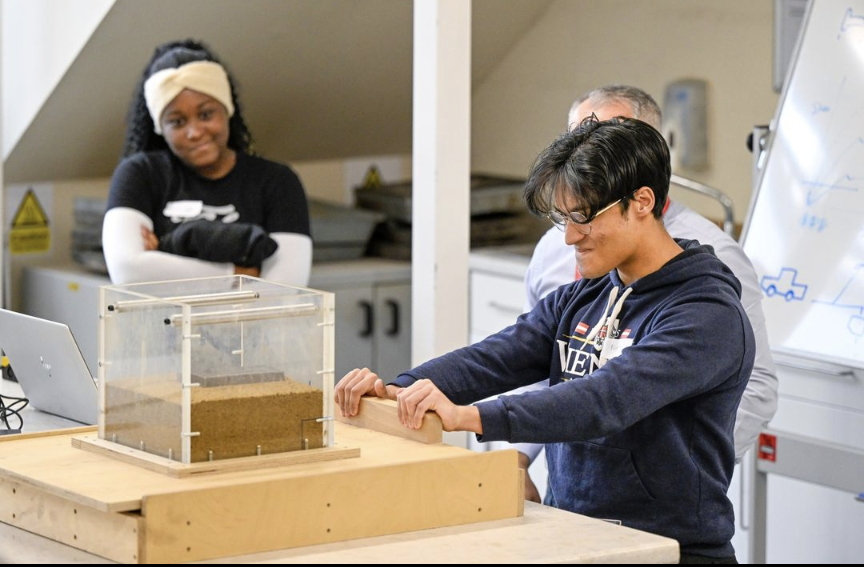 We were asked for one person to come help with the experiments and I nominated to be one. We were also shown many machines, such as different microscopes to examine micro cracks in structures. We were also shown vaccum chambers and Tensile testing machines.
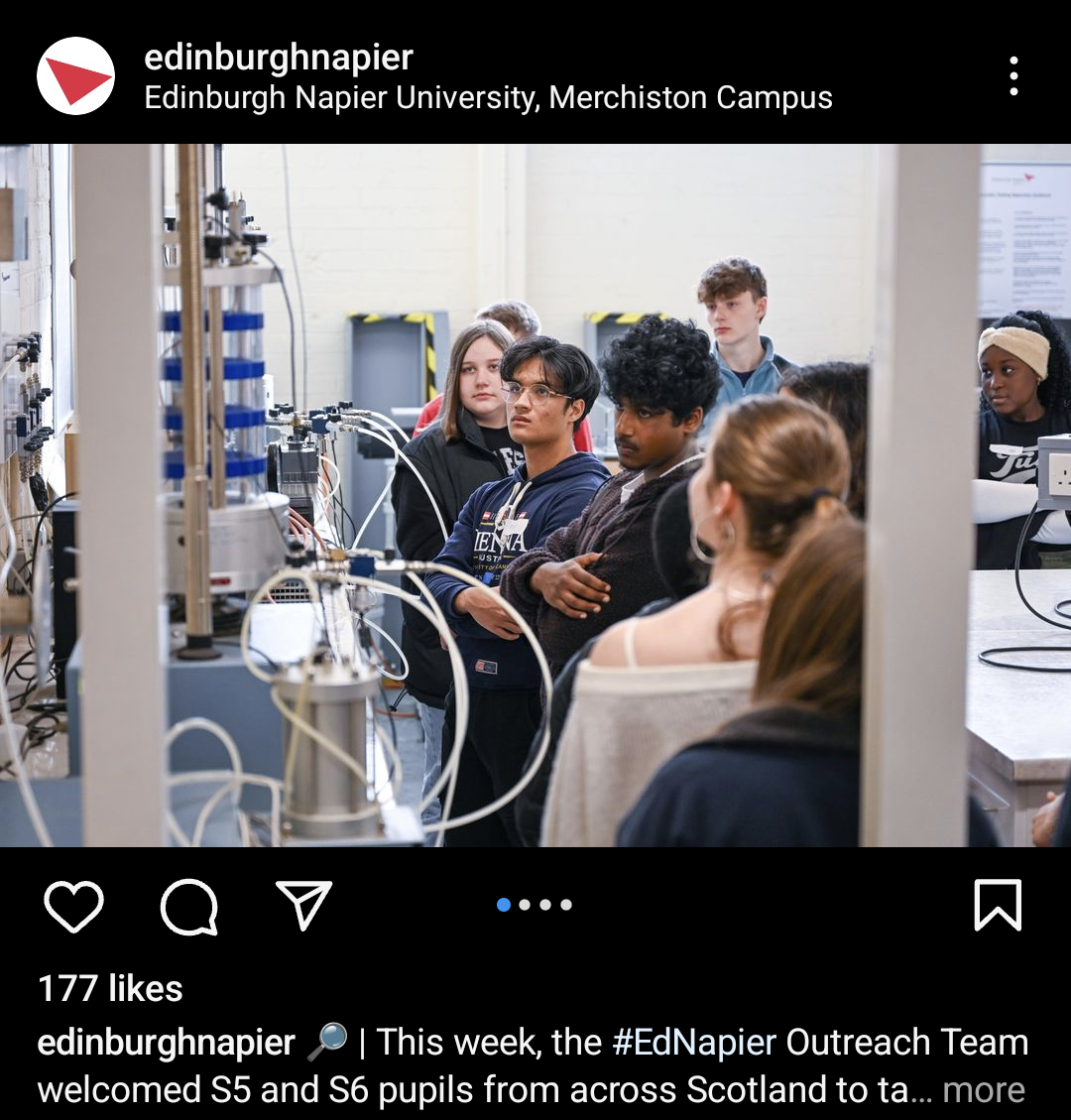 These photos were taken by photographers for social pages of Edinburgh Napier University.
You can check the instagram post by clicking on this sentence.
On the second day, we had to take part in a competition. The competition was "carousel" styled with multiple tasks and we had limited time with each one before we had to move to the next one.
These photos were taken by photographers for social pages of Edinburgh Napier University.
You can check the instagram post by clicking on this sentence.
On the second day, we had to take part in a competition. The competition was "carousel" styled with multiple tasks and we had limited time with each one before we had to move to the next one.
Our team won by majority, winning 2 of the 3 tasks. We won, not by having the best machines or objects, but by discovering really creative loopholes which the ENU team allowed.
Our first task was to create a parachute that would glide down in the air the longest. This was actually our only task that we failed as we didn't really have much of a strategy and couldn't think of any loopholes.
Our second task however, was to create a catapult that would launch an eraser as far as possible. This was by far our strongest victory by just the simple loophole we discovered. We were given some materials most teams used them to create the frame and the weight of the catapult. Except, they never stated that the catapult needed to have been powered by an external weight that was created by the materials. So we used human power instead.
Our catapult was a simple pencil, that had a bowl to carry the eraser on one side, while we had another guy "karate chop" the other side of the pencil, swinging it propelling the rubber. The other teams before us could only get the rubber as far as 2 tables long. We got our's out of the room.
Our third task was to build a car that needed reach a finish line as fast as possible. We first tried to create a rubber band engine where the rubber band would be under tension and slowly turn the wheels, moving the car forward. Like those toy cars where you push back to charge up the gears to make it move.
This design barely worked and when it did, it was way too slow so we moved on to creating a ramp for the car to slide down. This is when our next loophole came. There was a massive issue with the wheels, as they would end up bending inwards making the car incredibly unstable.
They never stated anything about what needed to be put on the object, so we ditched the wheels and ultimately just had a slab. The staff ended up telling us that we needed wheels so we drew them instead of physically adding them on. As well as this, we also used human power to initially push the car down the ramp, making our "car" the fastest compared to other teams.
Our third task was to build a boat that would sail to a finish line as fast as possible, similar to the car task.
We created a sail for the boat and had to figure out how to make it move. The ENU team said you could only do 1 blow, but they never stated how long you could. So instead of doing 1 quick blow, we had one guy do one long blow on the sail the whole way through, propelling the boat the entire journey.
Our last day consisted of exploring the campus more and asking more questions, we came across the CNC workshop where we learnt about CNC machines and witnessed a 5-axis CNC cut into a metal block.
This experience was really fun and made me realise how well I can think out of the box. I met some really great people and learnt alot about other Engineering branches apart from Aerospace. I also got to physically do some activities and did what I love doing, designing and building things.
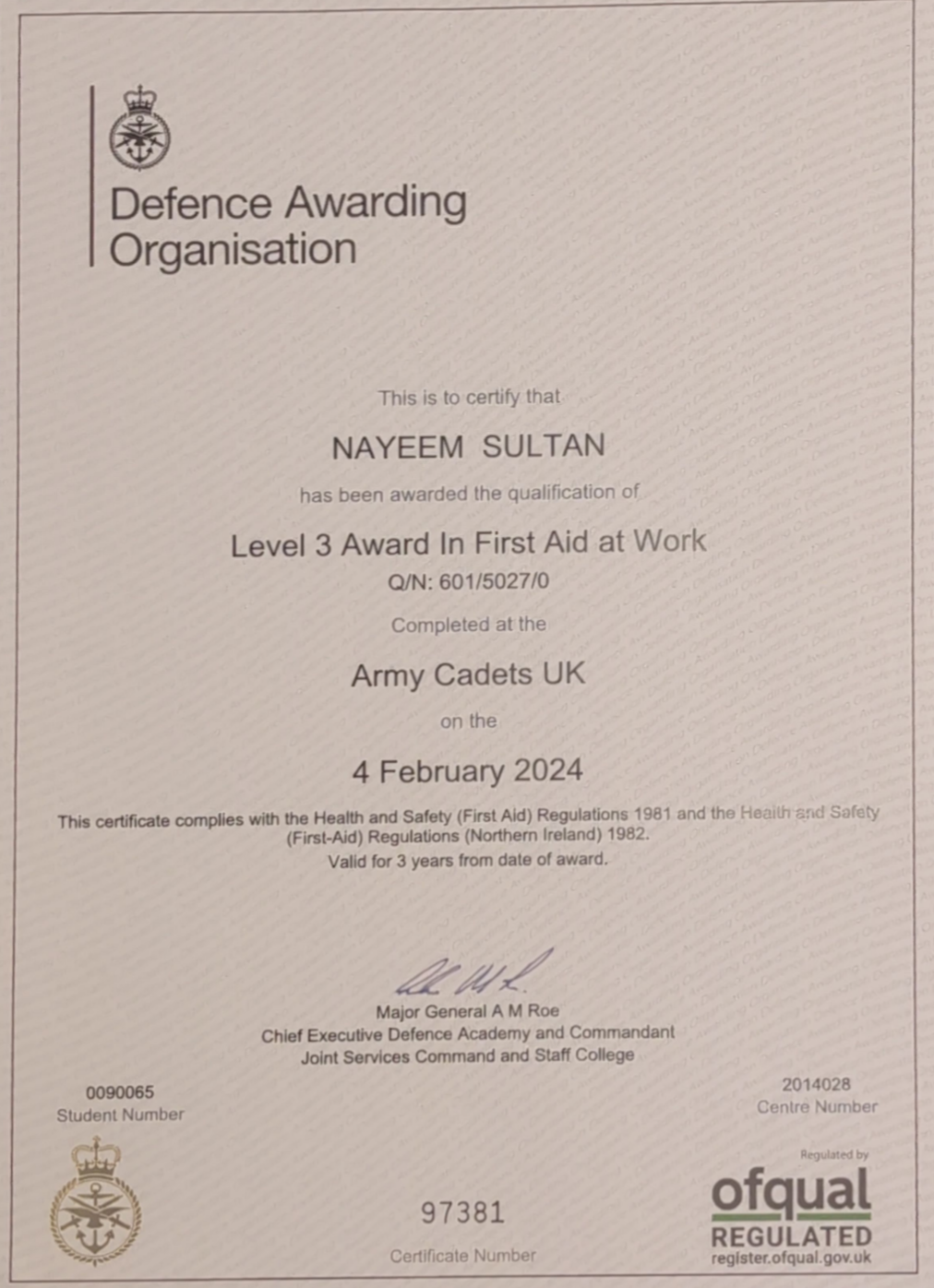
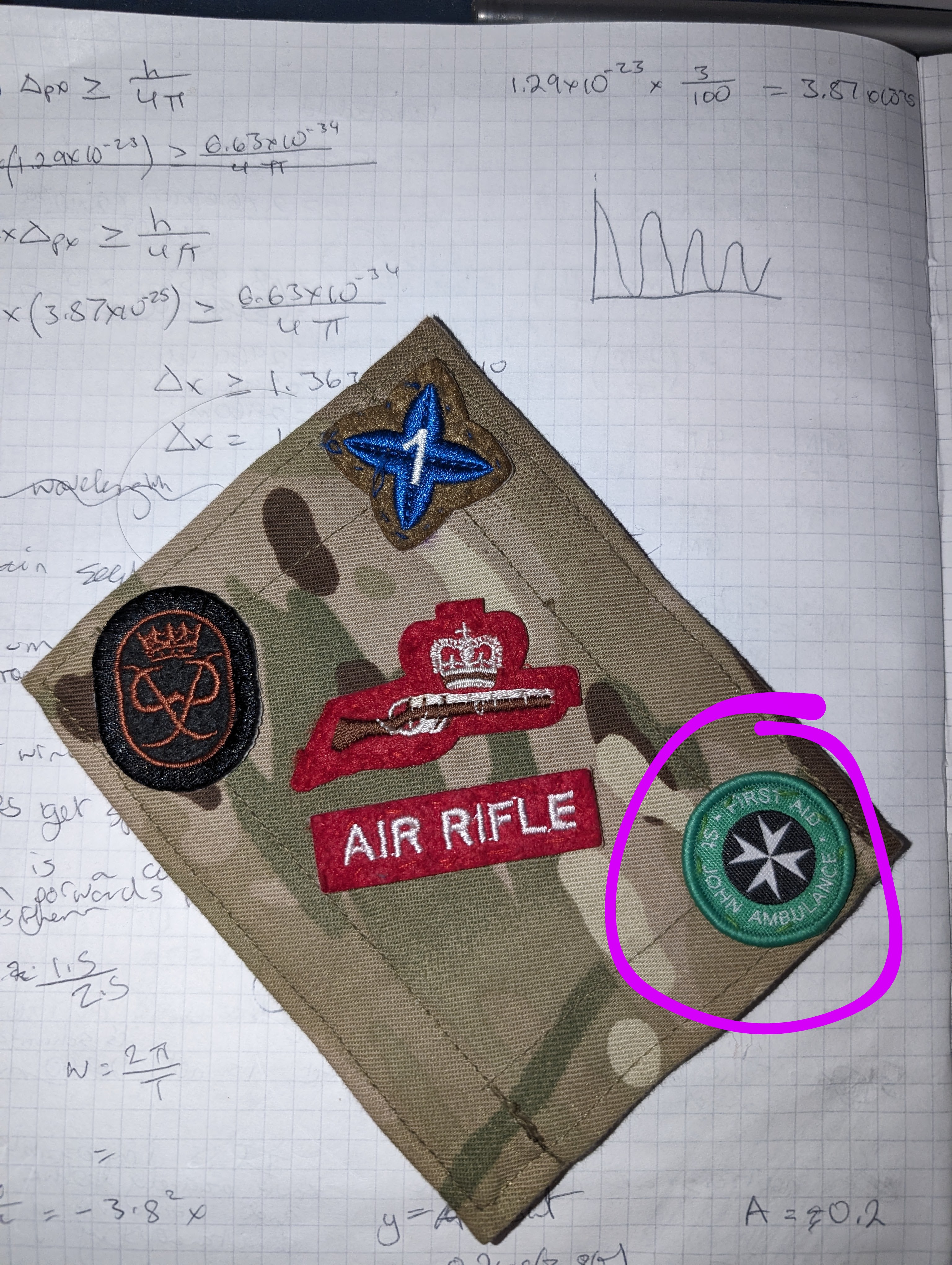
In this specialised camp, I underwent First Aid training to achieve my "First Aid at Work" Certificate and Badge.
This course took about 2 days, in which we took many notes, did practicals and were eventually tested on all of it, including 2 written tests.
This course was provided by the ACF and St John Ambulance.
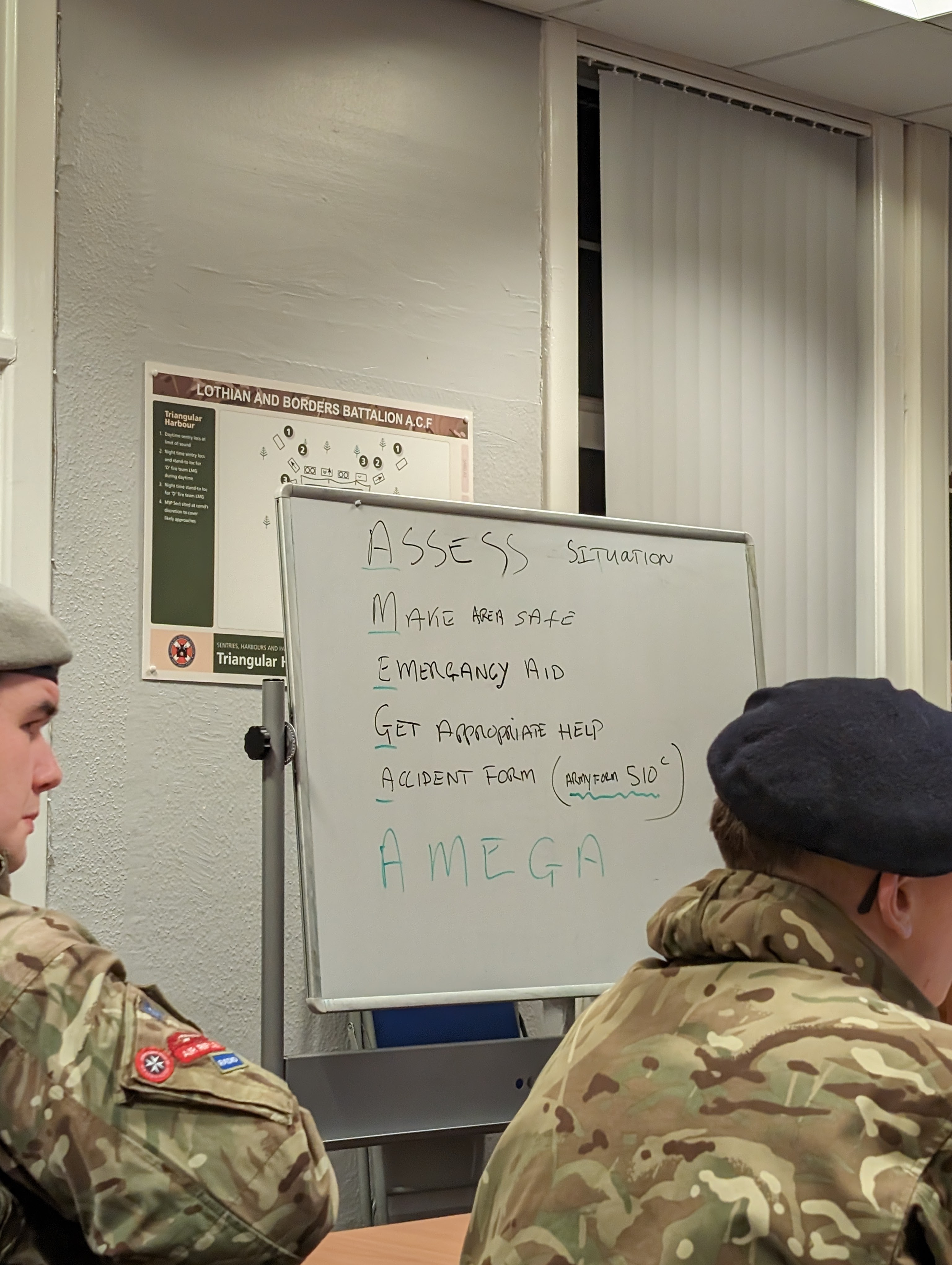
 In our lessons, we were taught many different types of injuries and how to deal with them such as spinal, head, seizures, cuts and more.
We were also put into groups at times to do our own research through the use of textbooks and present them to everyone else.
In our lessons, we were taught many different types of injuries and how to deal with them such as spinal, head, seizures, cuts and more.
We were also put into groups at times to do our own research through the use of textbooks and present them to everyone else.
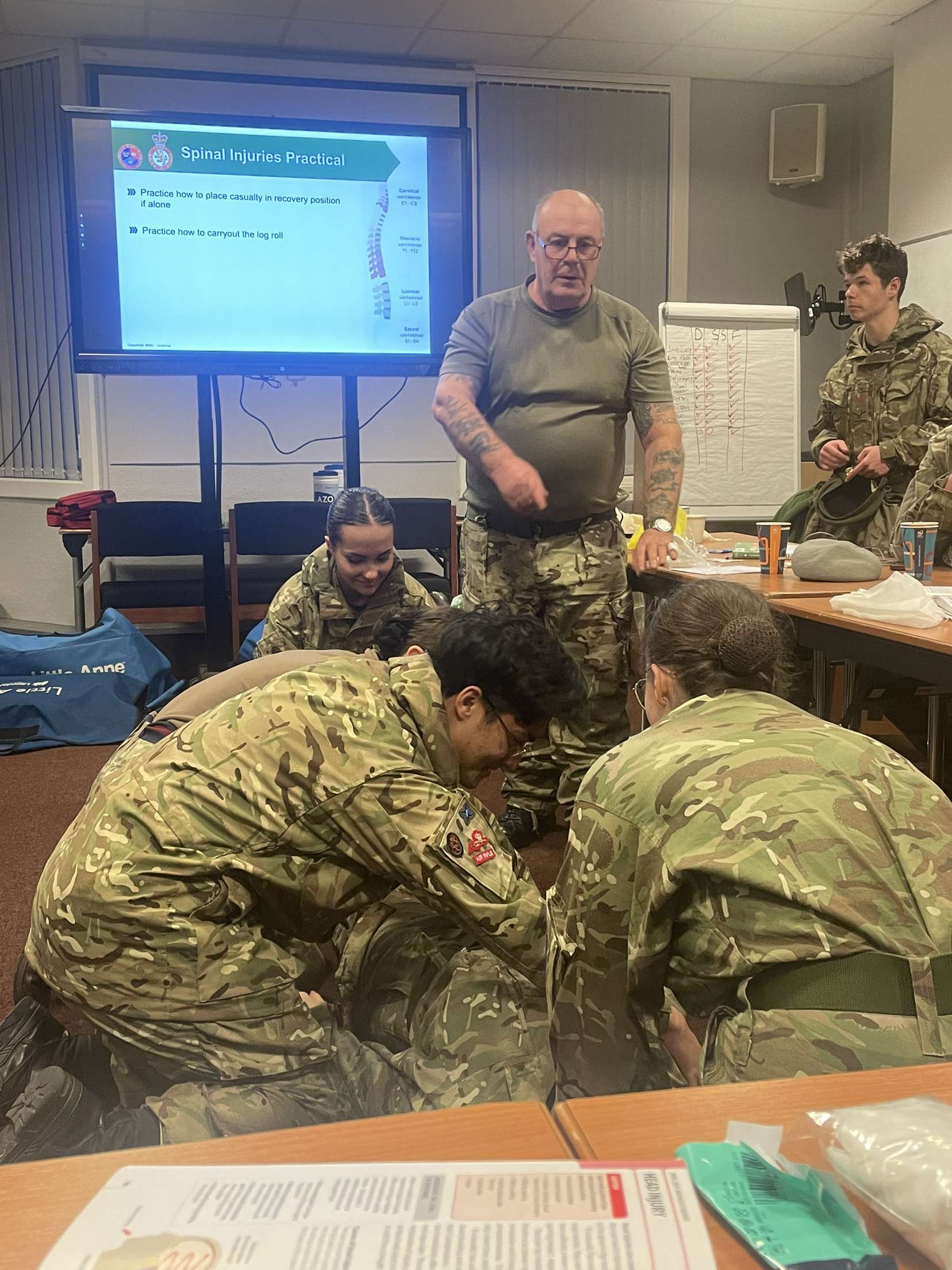
 As for one of the practicals, we were taught how to put someone in the recovery position if they had a spinal injury.
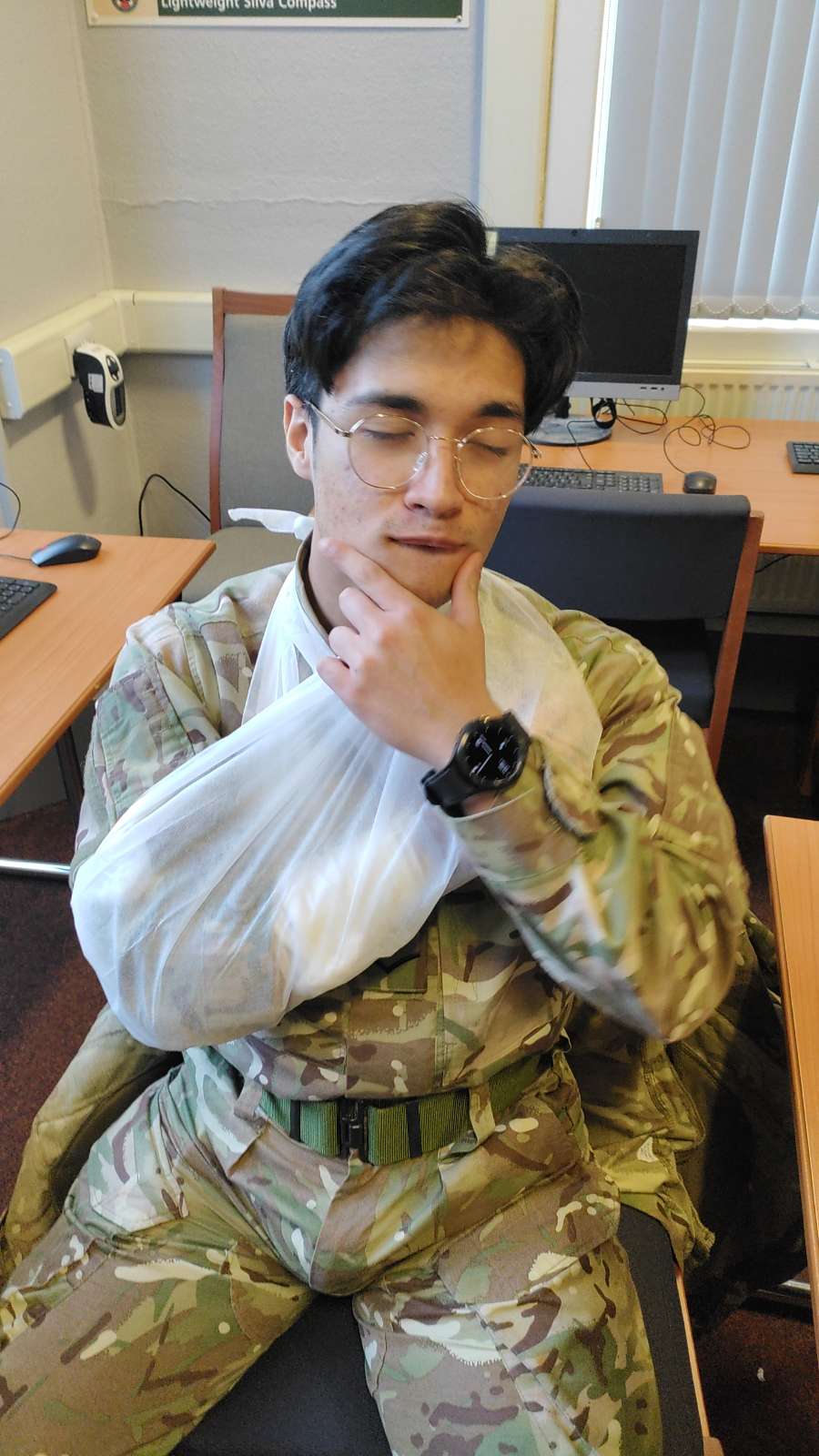
 We also learnt how to use bandages and how to make them into either arm slings or elevation slings.
 This camp was incredibly fun to do and very useful, as it allowed me to learn something so important that may allow me in the near future to aid someone in need or save a life.
I passed every test with great success and I proudly gained my certificate and badge as proof of my success.
This camp was incredibly fun to do and very useful, as it allowed me to learn something so important that may allow me in the near future to aid someone in need or save a life.
I passed every test with great success and I proudly gained my certificate and badge as proof of my success.
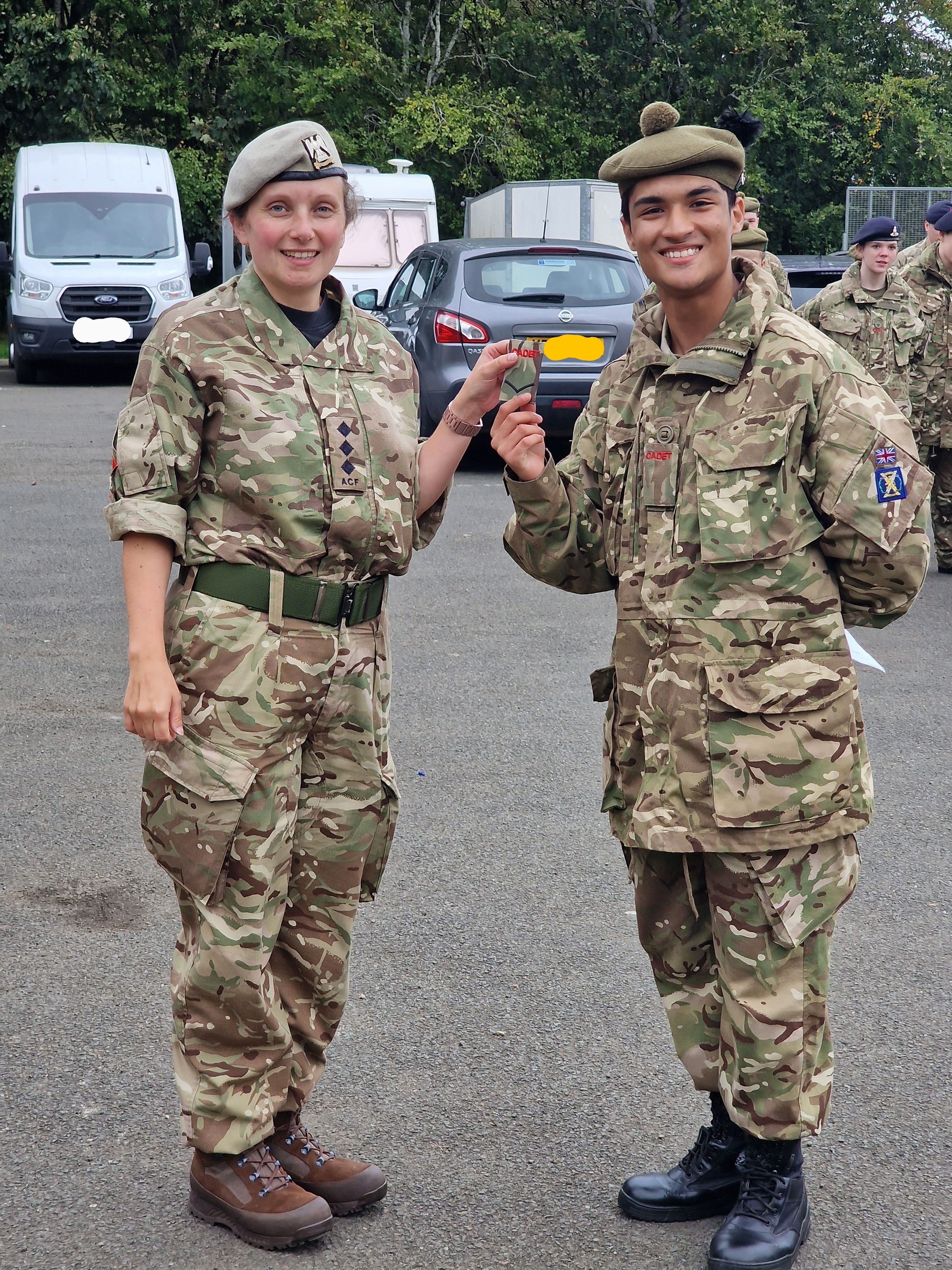
On September 2023, I was promoted from Cadet to Lance Corporal as a result of my efforts and leadership skills. I was already acting in a leader role, as I would be tasked to be In Command in certain tasks, help Cadets that were struggling and was working with other NCOs (Non Commissioned Officers).
I also excelled in many activites and would be tasked to teach one on one with my friends or cadets that were struggling. By the end I was known very well by the entire Company and had never gotten into trouble.
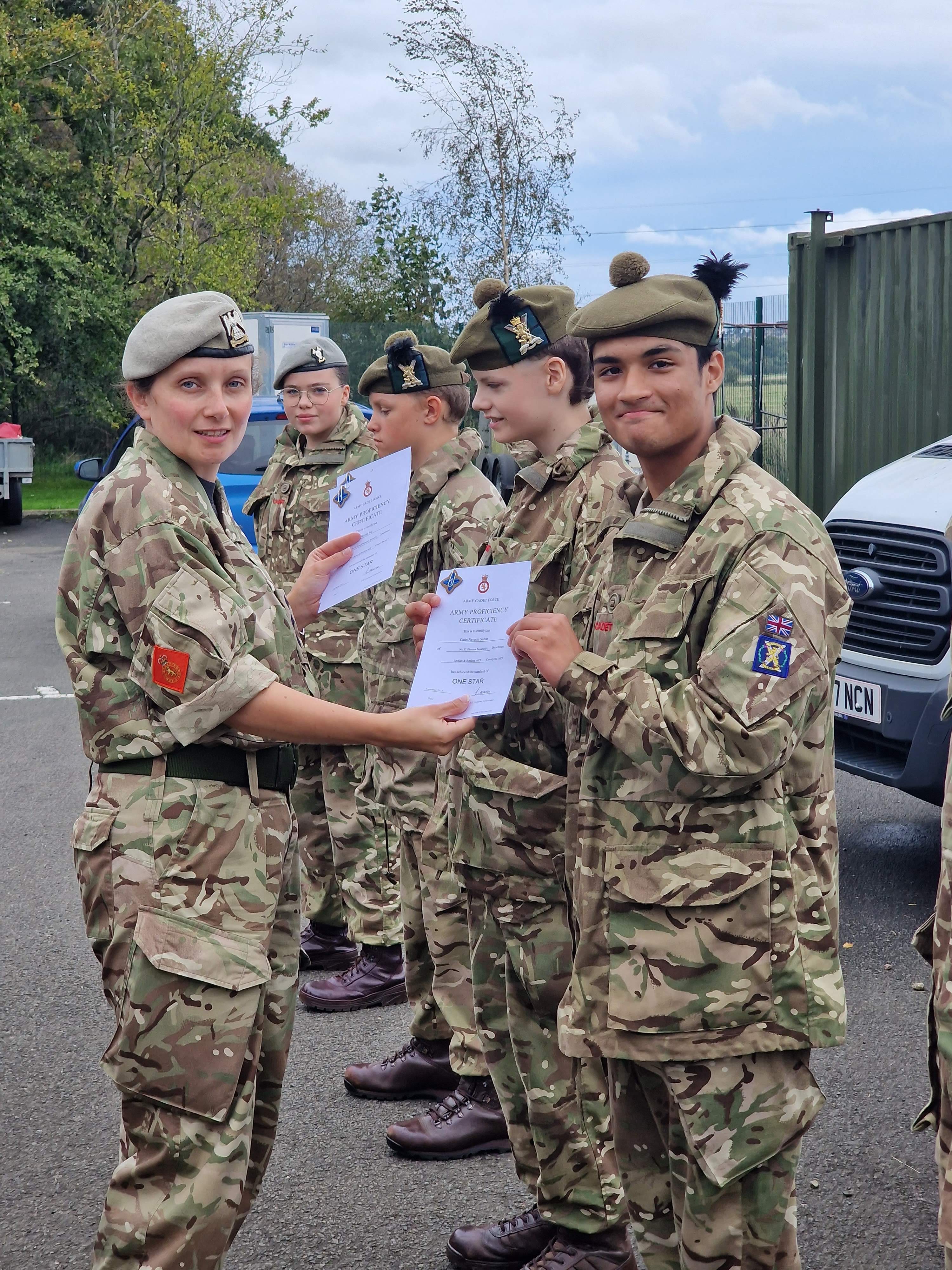
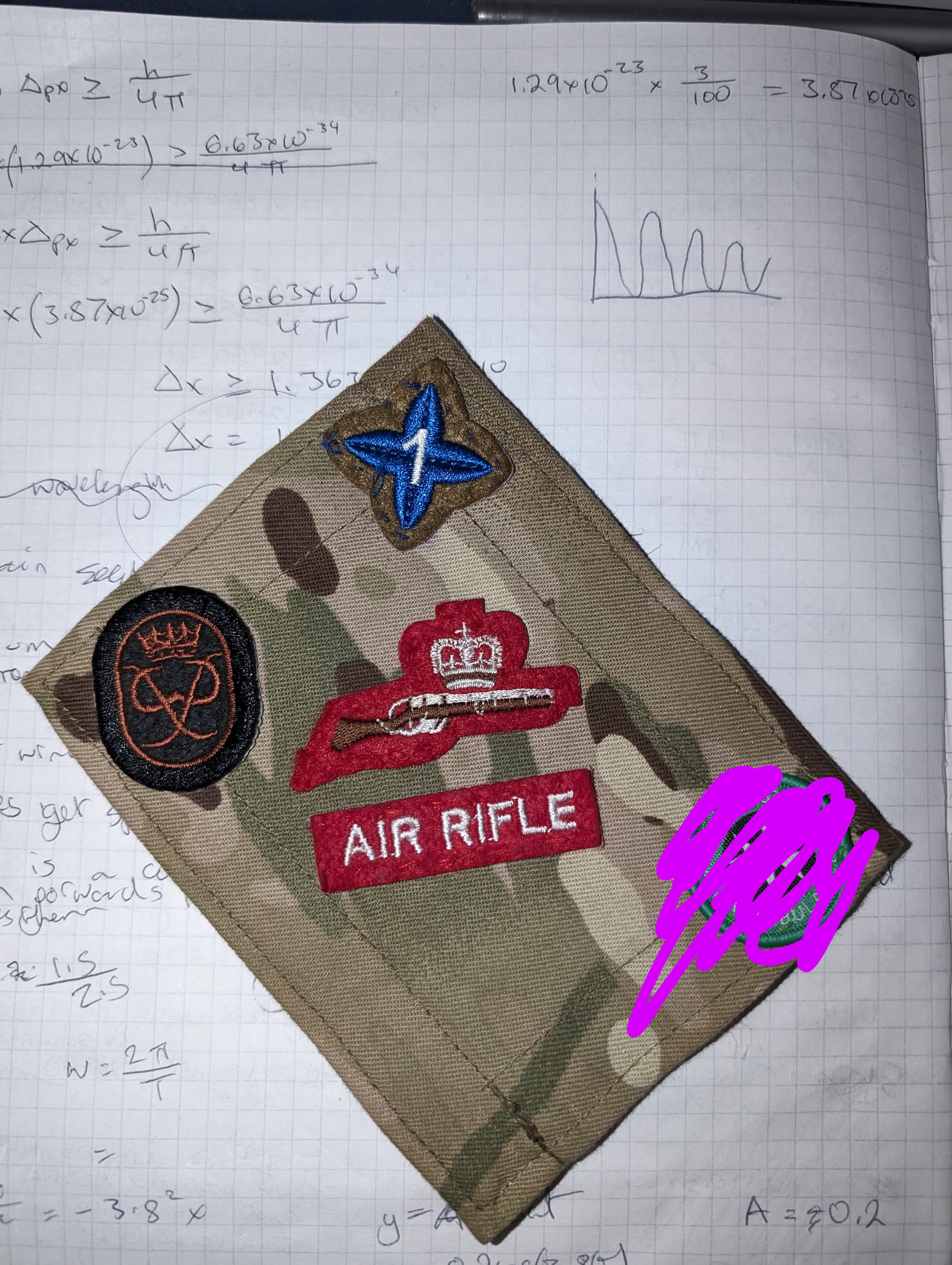
 In this camp as well, I gained my 1 star certifcate, a Marksman class shooting badge (highest level) for the Air Rifle and my Bronze DofE badge for achieving the Bronze Award (more on it in the DofE section).
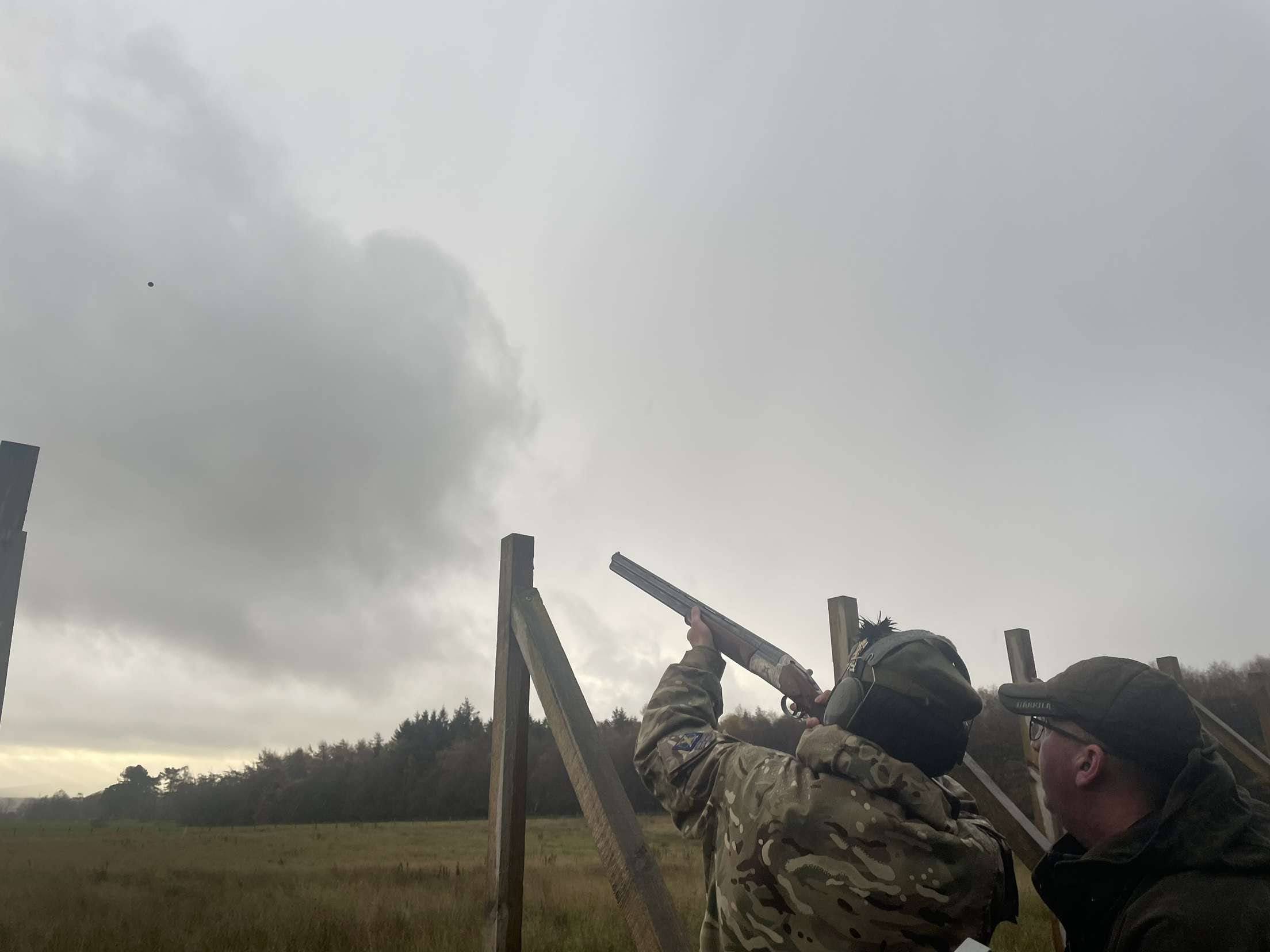
During my time in cadets, I demonstrated exceptional shooting skills and was selected among some of my friends to go to a specialised camp where we would tryout for the Battalion Shooting Team. This team was to compete in the National Competitions amongst other battalions and only a select few could be chosen.
There is a problem however, as I was going to age out of cadets in about 2 months at the time, and for me to compete I would need to still be in cadets for another 3 more months for a total of 5, which I just couldn't so. So I wouldn't be able to be in the team but I thought it would be fun.
Here are some shots I took that led to be being selected for tryouts.
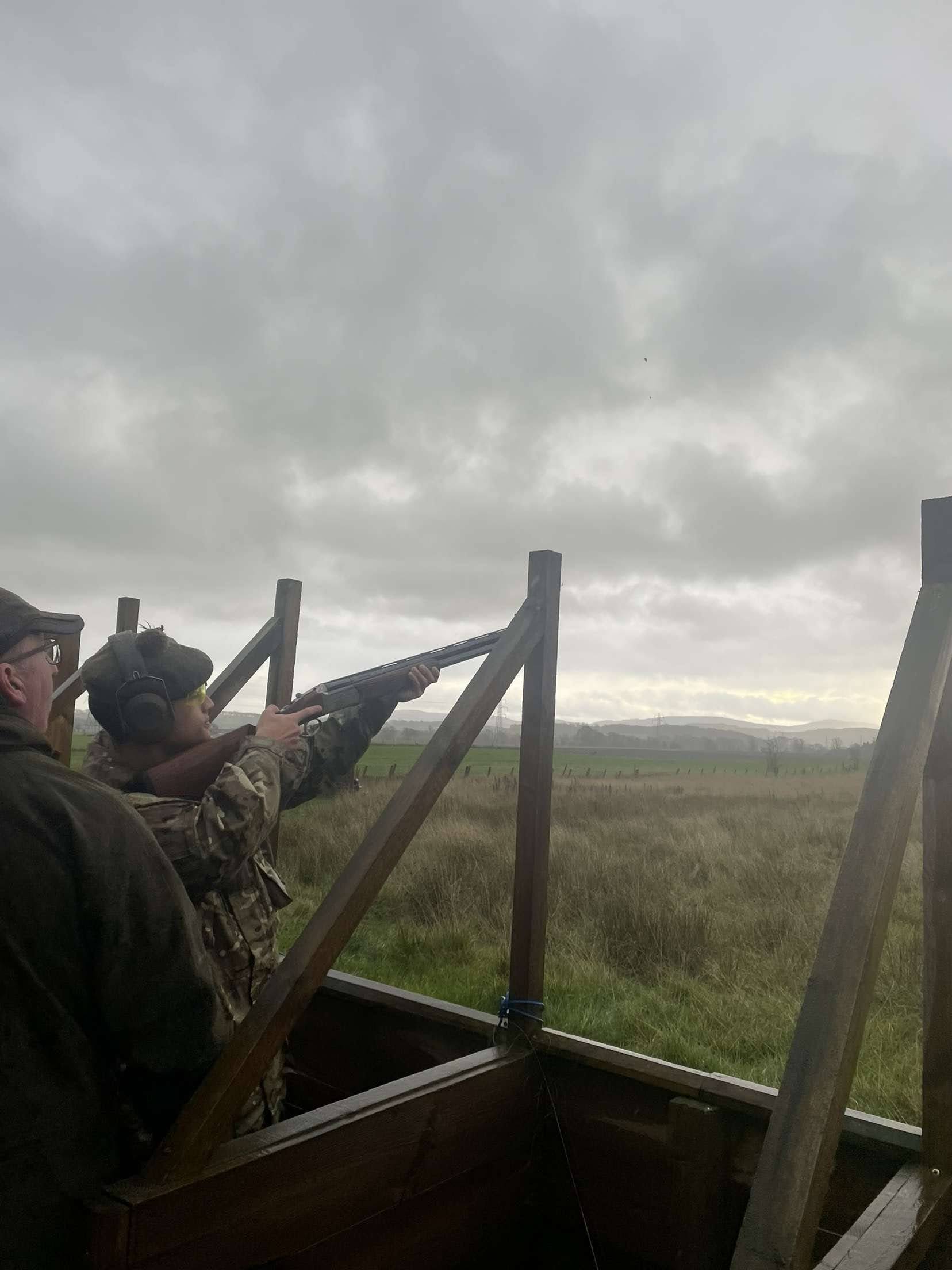 On February 2024, I attended the specialised camp and was put into a smaller group, "Syndicate 2", which comprised of people from other companies and specifically ones that I did not know.
We were immediately given new weapons that we were not used to, the .22 smallbore rifle used for early target shooting. At that time, I was only able to use the Air rifle and blank fire the GP Rifle (L98A2). We were taught how to open up the rifle for inspection and cleaning, how to assemble it, the different commands that would be called out, jamming procedures and more.
One really important skill we were taught was how to adjust the rifle to our body shape. This required a little bit of maths to adjust the sight to zero it, but there was also a way to roughly zero it by disassembling the rifle and comparing the position of the bullet looking through the barrel and the sight, making sure they line up at the same spot.
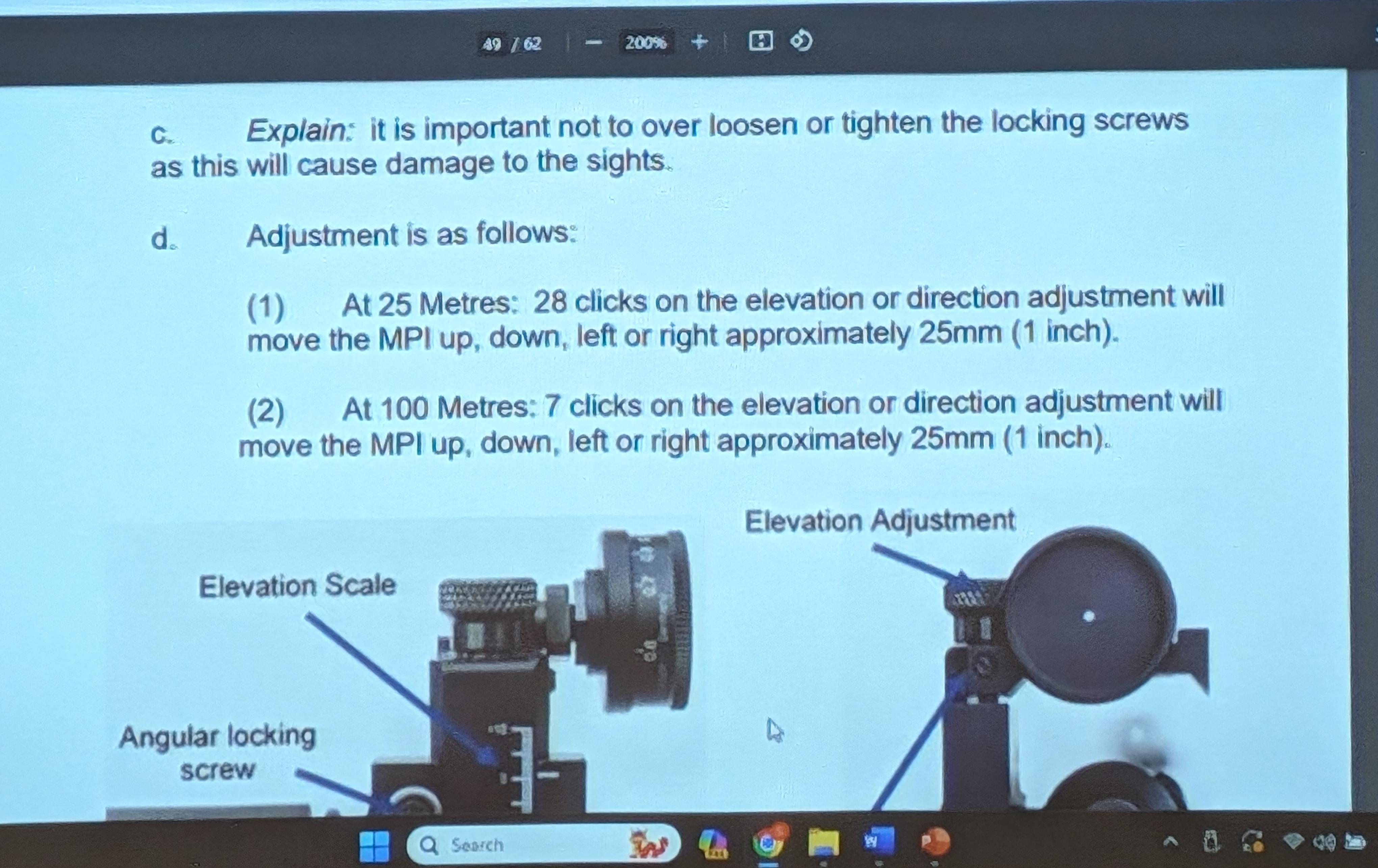
After the .22 rifle training, we conducted our Weapons Handling Tests on them and moved on to the Target Rifle, the official weapon used in the competitions that shoots 7.62 calibre. Again, since I wasn't able to attend the competition due to my age, I would not be able to actually use the weapon but still decided to learn about it and even do the Weapons Handling Test for it.
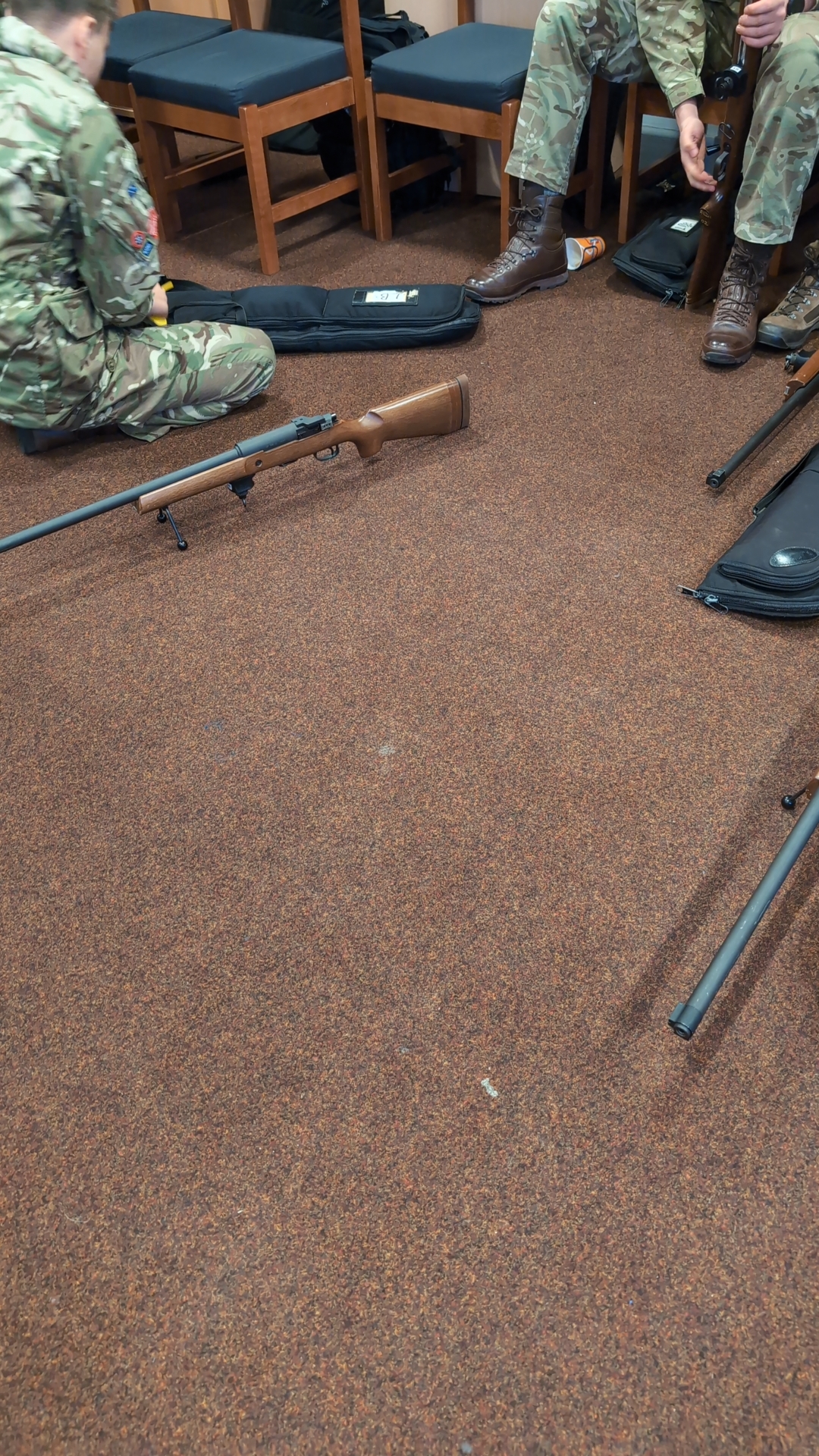 This weapon was significantly heavier than the .22 and more clunky, but all the mechanisms and drills were almost the same as it. We did the Weapon Handling Test for it and proceeded to do our tryouts using the .22 rifle. Using our knowledge, we adjusted and fitted our individual weapons to our body frame and made sure everything was in perfect condition.
Here is me after adjusting my rifle:
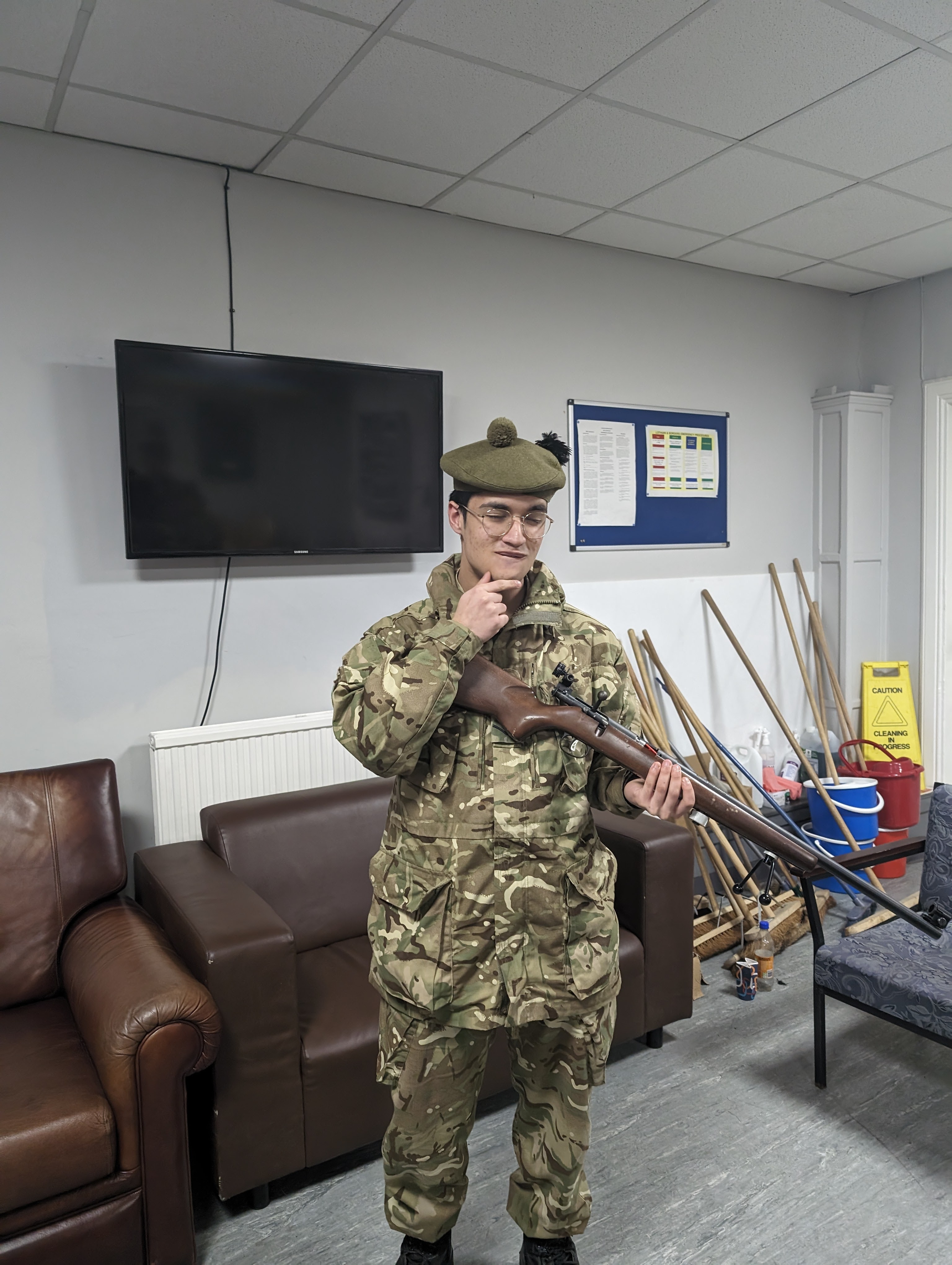 I had somewhat of an awkward adjustment compared to others, I prefered to have the butt part of the stock extended 2 levels and my front handguard pushed back so I can keep my hands closer than usual.
These were my target shots:
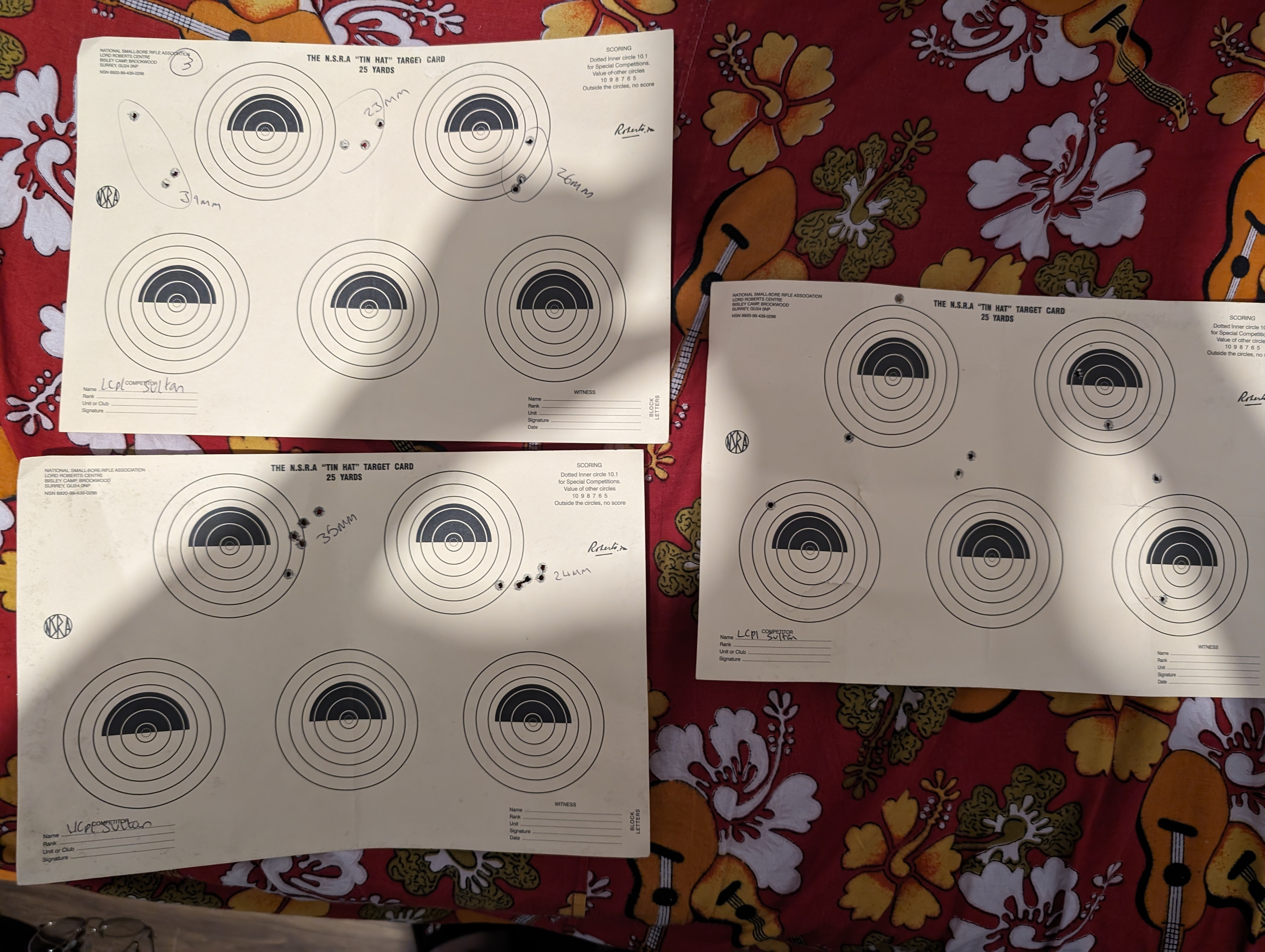 The tryouts consisted of a shooting 5 shots in 3 different target positions, to test my groupings. Then 3 shots in 2 positions that would test my accuracy. I am quite proud of my groupings, as I had a minimum of 23mm and a max of 39mm. Compare that to others that reached up 110mm, I would say I did pretty good.
However, I am not really proud of my accuracy shoots but I can also blame part of it due to my sight. When adjusting my sight, I could not ever get it to be properly zeroed so I was at a disadvantage. This would mean my shots would tend to aim to the top left alot which meant at times I would be blindfiring and guessing where the shot would go.
In the end, I achieved the highest level of shooting badge for the .22 rifle possible at the camp. The First-class .22 Badge, shown on my patch:
On November 2023, I was given the honour to lay the wreath on Rememberance Sunday at my local church celebration. This was due to my exceptional skill at Drill and Uniform, in which I conducted myself in a very professional manner.
I would practice heavily the entire week after I was given the honour and on that Sunday morning, I laid the wreath in front of many families and friends with Soldiers from the Army Reserves, Sea Cadets, and all the different types of Scouting clubs.
This experience was an incredible honour and I will always cherish it. To this day I still remember the hardwork and the actual ceremony like it was yesterday.